
 The Skin Finity
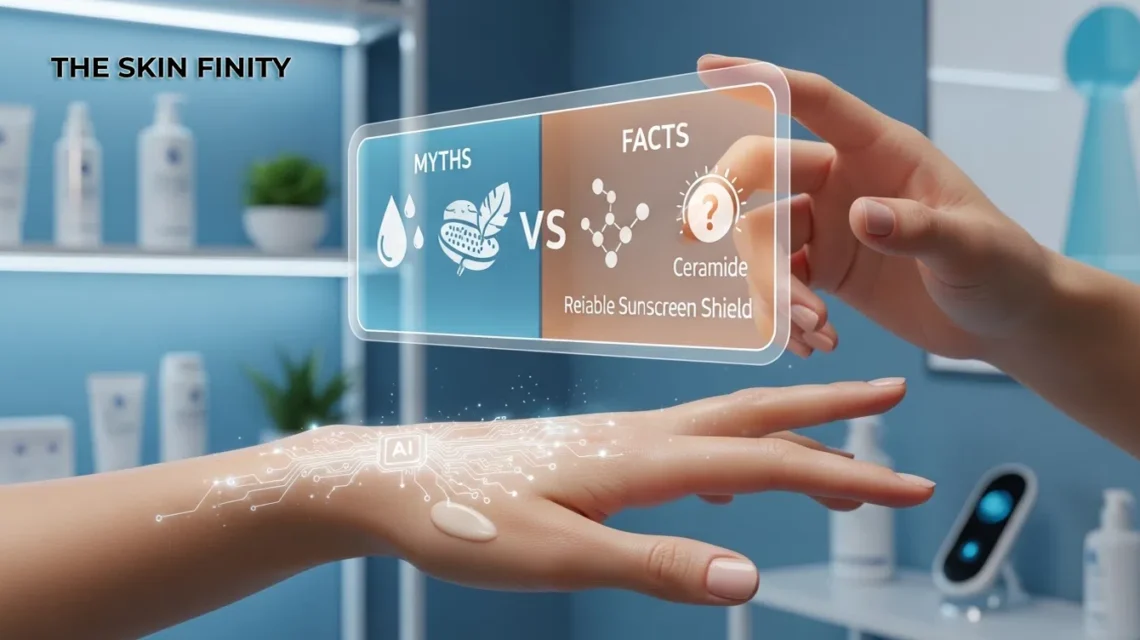
 We have never had more access to knowledge about skin care and products, yet more often than not, misleading information permeates our skin care reality. From old wives’ tales, tech-driven claims, and influencer praises, incorrect skin care practices are often done with the best intentions, yet the surrounding science is comforting and incorrect. Focusing on 2026, we begin to see the evolution of sustainable skin care practices, AI skincare advice, and advanced cosmetic technology. You must approach these changes with evidence and care.
This will serve as your skincare myths guide. We will be focusing on skin care trends in 2026, including dismantling persistent beauty misconceptions and replacing them with evidence-based and dermatologist approved facts. Our goal is to help you shift your focus from confusion towards proposing a healthy skin policy with skin care practices that will save you time, effort, and protect your skin health.
Common Skin Care Myths That Refuse to Fade
These naive beliefs about skin care and the practices related to them are the source of much skincare misinformation, leading practitioners down the wrong path even before they have a chance to begin.
Myth 1: “Higher Value Skincare is Always Better”
If you believe that a more expensive skincare product guarantees more efficacious results, you are perpetuating one of the most common skincare myths. A higher price tag often correlates to marketing and packaging, not necessarily superior actives.
- The Debunking: Efficacy is determined by ingredient concentration, formulation stability, and delivery systems. Many affordable brands incorporate the same research-backed actives, like retinoids and vitamin C, as luxury brands. A 2025 study found no consistent link between price and clinical performance for products with standardized ingredients.
- The 2026 Context: Direct-to-consumer “skincare-tech” and AI-driven formulation are making clinically effective products more accessible and affordable than ever.
- Your Practical Takeaway: Become an ingredient list decoder. Prioritize products with your needed active ingredients (e.g., hyaluronic acid, niacinamide) high on the list over a fancy brand name.
Myth 2: “Drinking Water Alone Improves Skin Hydration”
While good general advice, the direct impact of water on skin plumpness is overstated. This myth can lead to neglecting crucial topical care.
- The Debunking: Systemic hydration is vital, but doesn’t directly moisturize the epidermis. Skin hydration is governed by the skin barrier. Dry skin is often due to transepidermal water loss (TEWL), which drinking water can’t fix.
- The 2026 Context: Next-generation humectants like tremella mushroom extract offer superior topical hydration, outperforming the old “drink more water” advice alone.
- Your Practical Takeaway: Drink water for health, but hydrate your skin with a good moisturizer. Use a humectant (e.g., glycerin) to pull in water, an emollient (e.g., squalane) to smooth, and an occlusive (e.g., ceramides) to lock it all in.
Myth 3: “Acne is Caused by Dirty Skin”
This damaging myth fuels aggressive scrubbing, which can worsen acne by damaging the barrier and increasing inflammation.
- The Debunking:Acne is a complex, inflammatory condition influenced by four main factors:
- Excess sebum production.
- Clogged pores.
- C. acnes bacteria.
- Inflammation.
Surface dirt is not a primary cause. Over-cleansing strips the skin, triggering more oil production.
- The 2026 Context: The focus has shifted to balancing the skin microbiome with prebiotic and probiotic skincare, rather than “sterilizing” the skin.
- Your Practical Takeaway: Be gentle. Cleanse twice daily with a mild formula. Effective treatment involves ingredients that regulate cell turnover (like salicylic acid) and reduce bacteria/inflammation (like benzoyl peroxide or retinoids).
Ingredient & Product Category Misconceptions
These myths cause us to misuse or avoid entire categories of products, leading to common skin care mistakes.
Myth 4: “Natural Skincare is Always Safer and Better”
The “clean” beauty movement has created a false dichotomy where synthetic is bad and natural is inherently good—a prime example of skincare misinformation.
- The Debunking: “Natural” does not equal safe or effective (e.g., poison ivy, phototoxic citrus oils). Many “synthetic” ingredients are bio-engineered to be more potent, stable, and skin-friendly. The dose and formulation determine safety and efficacy, not origin.
- The 2026 Context: The conversation is evolving toward sustainable science—bio-engineered actives created with green chemistry and upcycled materials.
- Your Practical Takeaway: Don’t fear science. Choose brands transparent about sourcing and formulation. Prioritize clinically tested ingredients that suit your skin type, regardless of the “natural” label.
Myth 5: “Oily Skin Doesn’t Need Moisturizer”
This classic oily skin myth is a fast track to a dehydrated, yet oilier, complexion.
- The Debunking: Stripping skin of moisture can trigger a rebound in sebum production. A compromised skin barrier also loses water more easily, leading to dehydration beneath an oily surface.
- The 2026 Context: Formulators have perfected lightweight, non-comedogenic textures. New moisturizer for oily skin truths involve gel-creams and formulas with niacinamide and zinc PCA, which hydrate while balancing shine.
- Your Practical Takeaway: Every skin type needs a moisturizer. Oily skin thrives with water-based gels or serums containing hyaluronic acid and niacinamide to strengthen the barrier and help regulate oil.
Myth 6: “Exfoliate Daily for Glowing Skin”
The pursuit of a “glow” has led to damaging cycles of over-exfoliation, one of the most harmful exfoliation myths.
- The Debunking: Exfoliation is a controlled injury. Daily exfoliation doesn’t allow the skin barrier to recover, leading to damage, sensitivity, redness, and worsened texture.
- The 2026 Context: Gentler options like PHAs and enzyme exfoliants are ideal for sensitive skin. At-home skin sensors can help personalize exfoliation frequency based on real-time barrier data.
- Your Practical Takeaway: Less is more. Exfoliate 1-3 times per week maximum. Alternate with barrier-repairing days using ingredients like ceramides.
Sunscreen & Anti-Aging: The Biggest Arenas for Misinformation
Myths here can directly accelerate photoaging and undermine your skin health investments.
Myth 7: “Sunscreen is Only for Sunny Days” / “Higher SPF Means Vastly Better Protection”
These intertwined sunscreen myths lead to inadequate daily protection.
- The Debunking:
- Cloudy Day Myth: Up to 80% of UVA rays (aging rays) penetrate clouds and glass. Daily exposure is cumulative.
- SPF Myth: SPF primarily measures UVB protection. SPF 30 blocks ~97% of UVB, SPF 50 blocks ~98%. The gain is marginal. Broad spectrum coverage and correct application are far more critical than a very high SPF number.
- The 2026 Context: Sunscreen is seen as essential daily “urban armor” against UVA, UVB, blue light, and pollution, with more elegant, wearable formulas.
- Your Practical Takeaway: Wear broad-spectrum SPF 30 to 50 every single day, rain or shine. Apply generously (½ tsp for face/neck) and reapply every 2 hours outdoors.
Myth 8: “Anti-Aging Products Can Completely ‘Reverse’ Wrinkles”
Marketing hype has created unrealistic expectations, a key anti-aging product myth.
- The Debunking: Topicals can prevent and improve signs of aging (boost collagen, improve texture, soften lines) but cannot erase deep, static wrinkles like professional treatments can.
- The 2026 Context: The most effective approach combines topicals (next-gen retinoids, antioxidants) with at-home devices (LED, microcurrent) and professional treatments for a holistic strategy.
- Your Practical Takeaway: Set realistic goals. A consistent routine with retinoids, vitamin C, and peptides will make skin healthier and younger-looking. For significant structural changes, consult a professional.
Myth 9: “Botox Will Make Your Face Look Frozen”
Fear of this outcome—a pervasive cosmetic treatment myth—prevents many from considering subtle, effective treatments.
- The Debunking: Neuromodulators relax muscles that create dynamic wrinkles. A “frozen” look results from poor technique, not the product itself. A skilled injector aims for natural movement.
- The 2026 Context: AI-assisted injection mapping helps practitioners plan customized, natural-looking treatments. The trend is toward “baby Botox” (smaller, preventative doses).
- Your Practical Takeaway: Your injector is everything. Choose a board-certified professional with experience and an artistic eye for natural results.
The 2026 Landscape: Debunking Myths About Future Trends
New technologies bring new misconceptions. Let’s apply logic to emerging trends.
Myth 10: “AI Skincare Apps and Diagnostics are Just a Gimmick”
Dismissing all AI skincare advice as hype means missing out on powerful tools, but believing it’s infallible is equally wrong.
- The Debunking: AI is a superb pattern-recognition tool for tracking changes and personalizing routines, but it cannot diagnose medical conditions like a dermatologist can.
- Your Practical Takeaway: Use AI as a brilliant assistant for customization and tracking. For persistent skin issues (rashes, lesions), always seek an in-person professional evaluation.
Myth 11: “Sustainable and ‘Clean’ Skincare is Less Effective”
The idea that eco-friendly means weak is outdated.
- The Debunking: Modern sustainable skincare leverages green chemistry, fermentation tech, and waterless formulations to create potent, stable, and effective products. Safe preservation is understood as necessary for safety.
- Your Practical Takeaway: You don’t have to choose. Support brands that invest in both cutting-edge science and verified sustainable practices (e.g., refillable packaging, carbon-neutral shipping).
Your Skincare Myths, Answered: A 2026 FAQ
- Q1: Is it true that oily skin doesn’t need moisturizer?
A: False. This is a foundational oily skin myth. All skin types require moisturization to maintain a healthy barrier. Skipping it can lead to dehydration, triggering more oil. Opt for oil-free, non-comedogenic gels or lotions. - Q2: Does drinking more water directly cure dry skin?
A: Not directly. While vital for health, internal hydration has limited impact on epidermal dryness. Dry skin is best treated by preventing water loss with occlusive moisturizers and humectants. - Q3: Are natural skincare products always safer for sensitive skin?
A: Not necessarily. Many natural ingredients (essential oils, citrus) are common allergens. Sensitive skin often benefits more from minimalist, fragrance-free formulations with proven soothing ingredients. - Q4: Is exfoliating every day bad for your skin?
A: For most people, yes. Daily exfoliation can compromise the skin barrier, leading to sensitivity and inflammation. 1-3 times per week is the general recommendation, adjusted for your skin’s tolerance. - Q5: Do I need to wear sunscreen on cloudy days or indoors?
A: Absolutely. UVA rays, which cause premature aging, penetrate clouds and glass. Daily broad-spectrum sunscreen is the single most effective anti-aging and skin health step. - Q6: Does a higher SPF (like SPF 100) offer proportionally more protection?
A: The protection gain is minimal (SPF 30 blocks ~97%, SPF 50 ~98%, SPF 100 ~99%). Beyond SPF 50, broad-spectrum coverage and correct application are far more important. - Q7: Are anti-aging products only for people over 40?
A: Prevention is key. An anti-aging routine in your 20s/30s, centered on sunscreen and antioxidants (like Vitamin C), protects collagen and prevents photo-damage for long-term skin health. - Q8: Is acne caused by not washing your face enough?
A: This is a myth. Acne is driven by internal factors (hormones, sebum production). Over-washing can worsen it by irritating the skin. Gentle cleansing twice daily is sufficient.
Moving Forward with Skincare Truths
Your journey to healthy skin in 2026 isn’t about chasing miracles or trends. It’s built on evidence, personalized understanding, and intelligent skepticism. By debunking these common skincare myths, you empower yourself to make smarter choices—whether evaluating an AI tool, a “clean” beauty product, or a classic sunscreen.
Listen to your skin. Prioritize ingredients over marketing. Embrace helpful technology wisely. And never underestimate the power of a strong skin barrier and daily SPF. Your most effective skincare routine is one built on facts, not fiction.Your most effective skincare routine is one built on facts, not fiction. Here’s to a future of informed, confident, and healthy skin.


 Niacinamide Benefits: The Science of Calming Inflammation and Evening Skin Tone
  Building a Minimalist Skincare Routine for Busy Professionals
  Serums vs. Moisturizers: What’s the Difference and Do You Need Both?
  Sunscreen is Non-Negotiable: A Simple Guide to SPF for Your Face
  What is Collagen and How Does It Actually Benefit Your Skin? (Including the 5 Types Explained)
 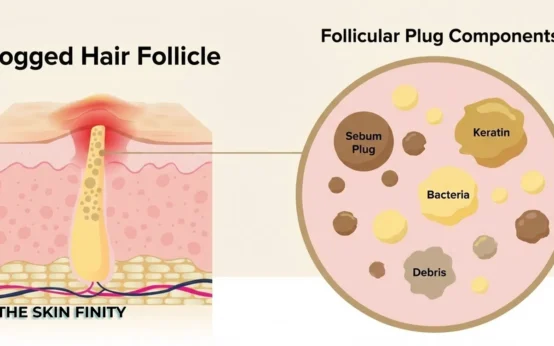 Skin Pore Truths: Can You Really Shrink Pores or Just Minimize Their Appearance?