
 The Skin Finity
 If you have sensitive skin, you know the struggle. One wrong product, one overzealous exfoliation session, or even a sudden weather change—and your face responds with angry redness, stinging, and that dreaded tight feeling. For years, the sensitive skin community has cycled through “gentle” ingredients, often finding them either too weak to work or mysteriously irritating despite their calming claims.
Then came Cica.
Walk into any skincare aisle today, and you’ll spot it everywhere: Cica creams, Cica serums, Cica sleeping masks. But here’s what most brands won’t tell you—Cica isn’t an ingredient invented by a laboratory. It’s the marketing nickname for Centella Asiatica, an ancient medicinal herb also known as Gotu kola or Tiger grass extract. And unlike fleeting beauty trends, this botanical powerhouse has centuries of traditional use and now, hard clinical evidence to back its reputation as the gold standard in soothing skincare ingredients .
For those battling chronic redness, compromised moisture barriers, or reactive skin that flares at the slightest provocation, Centella Asiatica for sensitive skin isn’t just another product claim. It’s a genuine, science-backed remedy. This article will take you deep into the healing power of tiger grass for acne-prone sensitive skin, decode the specific compounds that make it work, and show you exactly how to incorporate this botanical skin soother into your routine for real, lasting results.
What is Centella Asiatica? The Herb with Many Names and Ancient Roots
Identity and Aliases
Centella Asiatica is a small, creeping herb native to the wetlands of Southeast Asia, India, China, and parts of the South Pacific. It grows unassumingly along rice paddies and shady ditches, yet its pharmacological footprint is anything but humble. You might know it by one of its many aliases: Gotu kola (the Ayurvedic name), Tiger grass extract, or simply “Cica” in modern K-beauty vernacular .
The “tiger grass” moniker comes from local folklore—observations that wounded tigers would roll in the plant to heal their injuries. While we can’t confirm tiger dermatology preferences, the symbolism stuck because it perfectly captures the plant’s core function: rapid, effective wound repair.
Traditional Medicine Roots
Long before Cica creams grazed Instagram feeds, this herb was a mainstay in traditional healing systems. In Chinese medicine, it was prescribed for fever, dysentery, and skin lesions. In Ayurveda, Gotu kola was revered as a “rasayana”—a rejuvenating herb that nourished both skin and mind. Historical records document its use for leprosy, psoriasis, and poorly healing wounds .
What traditional healers intuited through millennia of observation, modern science has now confirmed. The plant isn’t just a passive moisturizer; it actively intervenes in the skin’s repair processes.
From Folk Medicine to K-Beauty Icon
The journey from roadside weed to coveted skincare ingredient took a significant turn when Korean beauty manufacturers recognized Centella’s potential for sensitive, compromised skin. Today, Centella Asiatica in K-beauty routines for sensitive skin is practically ubiquitous. It appears in essences containing up to 45% Centella extract, cleansing foams, sheet masks, and intensive ampoules . The term “Cica” has become shorthand for any soothing, repairing product—even those that don’t actually contain the herb. This popularity isn’t merely marketing momentum; it’s rooted in reproducible, measurable dermatological outcomes.
The Science of Soothing: Four Compounds, One Powerful Effect
What makes Centella Asiatica so uniquely suited for sensitive skin isn’t a single miracle molecule—it’s a sophisticated quartet of triterpenoid saponins that work synergistically. Understanding these compounds helps explain why Centella skincare outperforms simpler soothing agents .
1. Madecassoside: The Inflammation Calmer
Consider madecassoside the lead violinist in this botanical orchestra. It’s the most extensively studied compound in Centella and the primary driver of its anti-inflammatory prowess. Research demonstrates that madecassoside blocks pro-inflammatory cytokines including interleukin-6 (IL-6) and tumor necrosis factor-alpha (TNF-α). It also inhibits the JAK/STAT3 signaling pathway—a molecular cascade involved in inflammatory skin conditions ranging from psoriasis to allergic dermatitis .
For sensitive skin, this translates to visible redness reduction and decreased reactivity. The anti-inflammatory benefits of madecassoside in skincare are so pronounced that recent clinical studies have incorporated it as a benchmark ingredient for soothing efficacy .
2. Asiaticoside: The Collagen Architect
Asiaticoside is Centella’s structural engineer. This compound stimulates fibroblast proliferation and enhances collagen synthesis through the TGF-β/Smad pathway. In plain language: it tells your skin cells to rebuild supporting structures. This is why asiaticoside is particularly valuable for scar remodeling and post-inflammatory erythema. It doesn’t just calm irritation—it helps the skin heal more completely .
3. Asiatic Acid and Madecassic Acid: The Protective Duo
These aglycones (the non-sugar portions of the saponins) serve complementary roles. Asiatic acid demonstrates antimicrobial activity against acne-triggering bacteria (Cutibacterium acnes) while also suppressing UVB-induced inflammation. Madecassic acid reinforces antioxidant defenses and tissue protection . Together, they create a protective buffer against environmental stressors that often trigger sensitive skin flares.
The Cumulative Effect
When these four compounds work in concert, they don’t just palliate symptoms—they address underlying dysfunctions. Centella asiatica leaf extract encourages the skin to naturally produce hyaluronic acid, improving hydration from within. It increases type I collagen production by boosting fibroblast activity. And crucially for sensitive skin, it helps restore a compromised skin barrier .
A 2025 prospective clinical study involving 88 women with sensitive skin demonstrated that a cream containing Centella asiatica leaf extract produced significant improvements in just two weeks. Mean SS-10 scores (a validated measure of sensitive skin symptoms) dropped by 66% at week two and 76% at week four. Four key symptoms—skin irritation, tautness, itching, and redness—showed substantial reduction. Transepidermal water loss (TEWL) decreased, indicating barrier repair, while skin hydration increased at every measured time point .
This isn’t cosmetic conjecture. This is published, peer-reviewed data.
Top 5 Benefits: Why Sensitive Skin Thrives on Centella Asiatica
1. Instant and Cumulative Redness Reduction
The most immediate reward of Centella application is visual calm. Facial redness—whether from rosacea, retinoid irritation, or allergic contact dermatitis—visibly diminishes. In the 2025 clinical trial, facial red area and a* value (the colorimetric measure of redness) decreased rapidly, with participants reporting noticeable improvement as early as day two .
This isn’t merely vasoconstriction or temporary cooling. Madecassoside and asiatic acid actively block the NF-κB inflammatory pathway, addressing redness at the molecular source rather than merely masking it .
2. Skin Barrier Repair and Strengthening
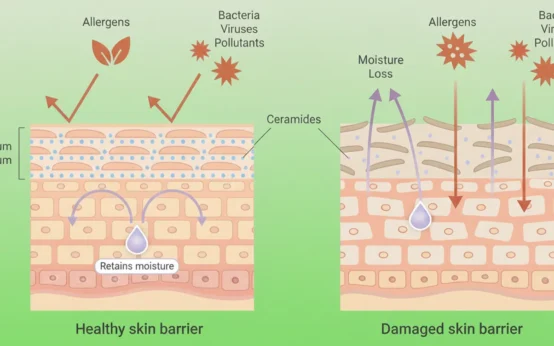
Sensitive skin is almost always accompanied by a compromised moisture barrier. The stratum corneum develops microscopic fissures, allowing irritants to penetrate and water to escape. Centella Asiatica facilitates barrier restoration through multiple mechanisms: it normalizes skin pH, supports ceramide synthesis, and reduces TEWL .
Products formulated with Centella Asiatica extract alongside complementary barrier-repairing ingredients (like ceramide NP and panthenol) show enhanced efficacy, making them particularly valuable for those with severely compromised skin .
3. Acne-Prone Sensitive Skin: Treating Without Trauma
Acne and sensitivity frequently coexist, creating a treatment paradox: the very ingredients needed to clear breakouts often exacerbate redness and stinging. This is where the healing power of tiger grass for acne-prone sensitive skin becomes indispensable.
Asiatic acid demonstrates direct antimicrobial activity against C. acnes while simultaneously calming the inflammatory response those bacteria trigger. Unlike benzoyl peroxide or high-concentration salicylic acid, Centella doesn’t compromise the barrier or induce compensatory dryness. It treats acne gently, making it suitable for long-term maintenance therapy .
4. Eczema and Psoriasis Support
Atopic dermatitis and psoriasis are characterized by chronic inflammation and impaired barrier function. While Centella Asiatica isn’t a substitute for prescription immunomodulators, emerging evidence positions it as a valuable adjunct therapy. Its JAK/STAT3 pathway inhibition is particularly relevant for psoriasis management, as this signaling cascade is hyperactivated in psoriatic lesions .
The soothing effects of Gotu kola on eczema manifest as reduced pruritus (itching) and decreased erythema. Patients report longer intervals between flares when incorporating Centella-rich moisturizers into their maintenance routines.
5. Anti-Aging for Reactive Skin
Sensitive skin types often watch from the sidelines as friends incorporate retinol, vitamin C, and glycolic acid into their anti-aging regimens. These ingredients, while effective, frequently provoke intolerable irritation in reactive individuals.
Centella Asiatica offers an alternative pathway. Its antioxidant flavonoids—quercetin and kaempferol—scavenge reactive oxygen species that drive photoaging. Asiaticoside stimulates collagen production without the peeling and stinging associated with retinoids. While the pace of visible change is slower than with prescription retinoids, it’s a pace that sensitive skin can actually tolerate .
Centella Asiatica vs. Other Soothing Ingredients
Centella vs. Aloe Vera
Aloe is exceptional for surface-level hydration and immediate cooling. However, its effects are primarily humectant and transient. Centella penetrates more deeply, influencing fibroblast activity and extracellular matrix remodeling. Aloe soothes; Centella heals and rebuilds.
Centella vs. Niacinamide
Niacinamide is a multitasking marvel—it regulates sebum, brightens discoloration, and supports ceramide production. However, a subset of sensitive individuals experiences flushing or stinging from niacinamide, particularly at concentrations above 5%. Centella is virtually non-reactive; its allergenicity profile is exceptionally low .
Centella vs. Panthenol (Vitamin B5)
Panthenol is a superb humectant and mild anti-inflammatory. It’s often paired with Centella in “Cica + B5” formulations because they’re complementary rather than competitive. Panthenol hydrates; Centella repairs. The combination is greater than the sum of its parts .
Clarifying the “Cica” Confusion
Is Cica different from Centella Asiatica?
No. “Cica” is simply an abbreviated, market-friendly term derived from Cicatrizante—Spanish/Portuguese for “healing agent.” When a product labels itself as “Cica cream,” it is almost invariably referencing Centella Asiatica extract or its isolated compounds (madecassoside, asiaticoside). The confusion arises because some brands use “Cica” as a descriptive term (meaning “healing cream”) even if the product contains minimal or no actual Centella. Always scan the ingredient deck .
How to Use Centella Asiatica in Your Skincare Routine
Choosing the Right Formulation
Centella Asiatica appears in diverse formats, each suited to different needs and skin types:
Serums and Ampoules: Ideal for targeted treatment. These concentrated liquids deliver high levels of madecassoside and asiaticoside rapidly. Suitable for layering under moisturizers .
Cica Creams: Richer formulations combining Centella extract with occlusive emollients. Particularly beneficial for nighttime barrier repair and for individuals with dry, compromised skin.
Toners and Essences: Lighter vehicles for those who prefer minimalist routines or live in humid climates. They provide maintenance-level Centella exposure without heaviness .
Cleansers: While Centella-infused cleansers exist, contact time is insufficient for significant therapeutic benefit. They’re gentle and non-stripping, but don’t rely on them as your primary Centella delivery system .
The Layering Protocol for Sensitive Skin
For maximum efficacy with minimum irritation risk:
- Cleanse gently with a low-pH, non-foaming cleanser
- Apply Centella serum/ampoule to damp skin
- Follow with Centella cream or a barrier-supporting moisturizer
- Seal with sunscreen during daylight hours
Concentration and Quality Considerations
Not all Centella products are created equal. Look for formulations where Centella Asiatica extract, madecassoside, or asiaticoside appear in the upper half of the ingredient list. Fermented Centella extracts may offer enhanced bioavailability, as fermentation breaks down cell walls and releases bound compounds .
A Note on DIY Preparations
Fresh Centella leaves, ground into paste, have been used traditionally for wound poultices. However, applying unprocessed plant material to sensitive facial skin carries risks: bacterial contamination, variable compound concentration, and potential contact dermatitis. Formulated products provide standardized, preservative-stabilized, and safety-tested delivery. Save the gardening for your salad .
What to Look for in Centella Products
The INCI (International Nomenclature of Cosmetic Ingredients) list tells the true story. Seek these specific entries:
- Centella Asiatica Extract – whole-plant extract containing the full compound spectrum
- Madecassoside – isolated, standardized active
- Asiaticoside – isolated, standardized active
- Asiatic Acid / Madecassic Acid – purified aglycones
Avoid products where “Cica” appears only in the marketing name but is absent from the ingredient declaration.
Emerging cultivars like Giant Centella Asiatica (GCA), developed by the Korea Forest Service in 2022, demonstrate significantly higher concentrations of madecassoside and asiaticoside. These novel cultivars may offer enhanced efficacy, particularly for pigmentation concerns, as research shows they more effectively suppress melanogenesis through MC1R receptor binding .
Frequently Asked Questions
1. Does Centella Asiatica help with acne scars?
Yes, particularly for post-inflammatory erythema (red marks) and post-inflammatory hyperpigmentation (brown marks). Asiaticoside accelerates collagen remodeling, which helps flatten and fade recent acne marks. It is less effective for deep icepick or boxcar scars, which typically require in-office procedures .
2. Is Centella Asiatica safe for sensitive skin during pregnancy?
Topical application is generally considered safe during pregnancy and lactation. Multiple products explicitly market themselves as suitable for pregnant users . However, oral Centella Asiatica supplements should be avoided during pregnancy due to insufficient safety data. As with any new product during pregnancy, patch test first and consult your healthcare provider.
3. Can I use Cica cream every day?
Absolutely. Centella Asiatica is approved for daily, long-term use. Unlike exfoliating acids or retinoids, it does not require “off” days or progressive tolerance building. Many patients use Centella-enriched moisturizers twice daily as their primary barrier support .
4. What is the difference between Centella Asiatica and Cica?
“Cica” is a marketing abbreviation derived from Cicatrizante. It refers to Centella Asiatica extract or its active compounds. There is no botanical distinction .
5. Does Centella Asiatica clog pores?
Pure Centella Asiatica extract and its isolated triterpenoids are non-comedogenic. However, rich Cica creams may contain emollient butters or oils that could congest very oily or acne-prone skin. If you’re prone to closed comedones, opt for lightweight Centella serums or gels rather than heavy creams .
6. How long does it take to see results for redness?
Immediate cooling and slight vasoconstriction occur within minutes of application. Clinically measured redness reduction appears within two days of consistent use. Maximum improvement for chronic facial erythema typically requires two to four weeks .
7. Can I mix Centella Asiatica with Vitamin C or Retinol?
Yes—and you should. Centella Asiatica is an ideal buffer for irritating actives. Apply your retinoid or vitamin C serum, follow with Centella cream, and you’ll experience significantly less peeling and stinging. Centella does not interfere with the efficacy of these ingredients; it simply manages the collateral inflammation .
8. Is Gotu kola the same as Pennywort?
Culinarily, yes. Fresh Gotu kola leaves are consumed as pennywort in Asian salads and juices. However, skincare benefits require specific, standardized extracts. Eating the herb is nutritious but won’t deliver the concentrated triterpenoid exposure needed for dermatological effects .
9. Does Tiger Grass help with sunburn?
Yes. Its anti-inflammatory properties reduce the heat and pain of acute sunburn, while its antioxidant flavonoids limit UV-induced oxidative damage. Centella also supports the skin’s natural desquamation process, leading to smoother healing .
10. Can men with razor burn use Centella Asiatica?
Exceptionally well. Razor burn is essentially traumatic folliculitis—micro-cuts combined with inflammatory reaction. Centella Asiatica’s wound healing and anti-inflammatory mechanisms are perfectly matched to this indication. A Centella-based serum or balm applied immediately after shaving significantly reduces erythema and papule formation.
The Final Takeaway
Sensitive skin is not simply skin that complains; it’s skin that is actively struggling. It struggles to retain water, to contain inflammation, and to defend against environmental insult. For decades, the sensitive skin community was offered palliation—moisture, occlusion, and avoidance—but rarely true repair.
Centella Asiatica changes that equation.
It is one of the few botanical ingredients that bridges the gap between traditional healing wisdom and twenty-first-century molecular pharmacology. Its four signature compounds target distinct but complementary pathways: madecassoside extinguishing inflammatory signals, asiaticoside rebuilding lost collagen, asiatic acid defending against microbial triggers, and madecassic acid neutralizing oxidative stress. The 2025 clinical data confirms what traditional healers have known for centuries: this herb genuinely repairs damaged tissue .
Whether you call it Gotu kola, Tiger grass extract, or simply Cica, Centella Asiatica skincare deserves its reputation. It will not transform your skin overnight, and it cannot single-handedly reverse years of barrier neglect. But incorporated consistently into a gentle, respectful routine, it offers something genuinely rare: healing without harm.
If you have sensitive skin and haven’t yet introduced Centella Asiatica, consider this your invitation. Your skin doesn’t need more aggressive exfoliation or stronger actives. It needs intelligent support. It needs repair.
It needs Cica.
Have you tried Centella Asiatica for your sensitive skin? Did it calm your redness or repair your barrier? Share your experience in the comments below—your story might help someone else find the soothing ingredient they’ve been searching for.


 Sensitive Skin SOS: How to Build a Gentle, Non-Irritating Routine
  Your Skin Barrier Explained: What It Is, Signs of Damage, and How to Protect & Repair It in 2026
  Cleanser 101: How to Choose the Right Face Wash for Your Skin Type