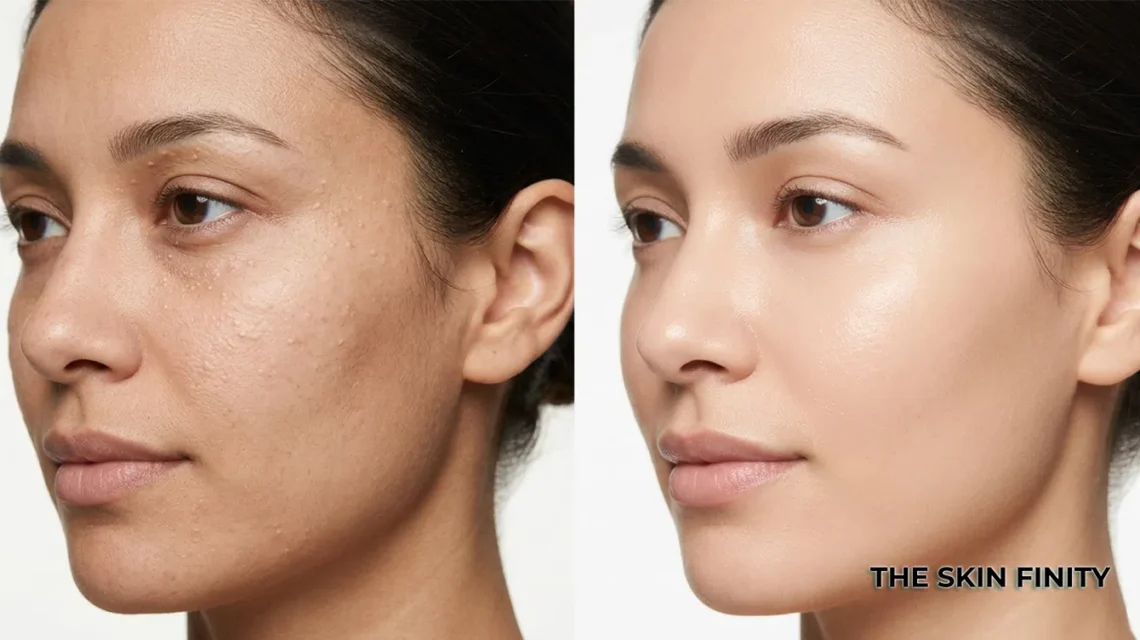
 The Skin Finity
 Have you ever noticed tiny, hard white bumps on your face that feel like grains of sand trapped under the skin? You might have tried squeezing them, only to find that nothing happens—they just sit there, stubborn and unchanged. Unlike the pustules and pimples of hormonal acne, these bumps are harder, more persistent, and often resistant to standard acne treatments.
If this sounds familiar, you are likely dealing with milia. While completely harmless, these small keratin cysts—often called milk spots—can be a source of frustration for many people seeking clear, smooth skin.
The good news? Effective milia removal is absolutely possible. Whether you are looking for immediate results from a professional or a long-term skincare strategy to prevent them, this comprehensive guide covers everything you need to know. We will explore the difference between milia vs whiteheads, the safest how to remove milia at home safely methods, and when it is time to see a dermatologist milia specialist.
By the end of this article, you will have a clear roadmap to finally get rid of those tiny white bumps for good.
What Are Milia? Understanding the “Milk Spots”
If you have ever searched for “what are milia,” you are not alone. It is one of the most common questions people have when they first notice these bumps.
Milia (pronounced mil-ee-uh) are small, superficial cysts that form just beneath the outer layer of the skin. They are technically known as “primary milia” and colloquially referred to as milk spots, a name derived from their milky-white appearance. Unlike acne, which involves oil and bacteria, milia are filled with a protein called keratin.
Think of keratin as the building block of your skin, hair, and nails. It is usually a good thing. However, when dead skin cells that contain keratin become trapped dead skin cells instead of shedding naturally, they can get trapped in small pockets just below the skin’s surface. Over time, these pockets harden into the small, pearl-like bumps you see.
These white bumps under skin are typically:
- 1-2 millimeters in size (small, like a pinhead)
- Firm to the touch (like a tiny seed)
- White or yellowish in color
- Completely painless and non-inflamed
Is Milia Contagious?
A common concern, especially for parents noticing milia on their newborns, is whether these bumps can spread. The answer is a definitive no.
Because milia are caused by structural skin issues—trapped dead skin cells and keratin—and not by bacteria, viruses, or fungi, they are not contagious. You cannot “catch” milia from someone else, nor can you spread them to other parts of your own body through touch.
What Causes Milia? Triggers and Risk Factors
Understanding the root cause of milia is the first step toward effective milia treatment and prevention. While they can sometimes appear spontaneously, there are several known triggers that create the perfect environment for these keratin cysts to form.
- Inability to Shed Dead Skin Cells: The primary biological cause is the skin’s failure to exfoliate naturally. In healthy skin, dead cells rise to the surface and slough off. In skin prone to milia, these cells become trapped dead skin cells beneath the surface, where they combine with keratin to form a cyst.
- Heavy or Occlusive Skincare Products: This is a major culprit in adults. Using thick, heavy creams or ointments (like petroleum jelly or rich lanolin-based products) can create a barrier that traps dead skin cells. This is why switching to non-comedogenic skincare—products specifically designed not to clog pores—is often the first recommendation.
- Skin Trauma: Any event that damages the skin can trigger milia as it heals. This includes burns, blisters, rashes, and even long-term sun damage, which thickens the skin’s outer layer.
- Cosmetic Procedures: Ironically, treatments designed to rejuvenate skin can sometimes lead to temporary milia. You might notice milia after laser treatment, dermabrasion, or deep chemical peels. This is usually a short-term side effect as the skin undergoes rapid healing and regeneration.
- Genetics: Some people are simply more prone to milia than others due to their genetic skin type.
A Note on Newborns
If you are a new parent noticing these bumps on your baby, do not worry. Milia on newborn baby skin is extremely common, affecting 40-50% of infants. It is caused by their immature sweat glands and hormonal influences from the mother, not by any action on your part. These typically resolve on their own within a few weeks.
Common Types and Locations of Milia
Milia can appear anywhere on the body, but they have favorite locations and specific forms. Knowing the type helps determine the best course of action.
- Milia on Face (Cheeks, Nose, Forehead): This is the most common presentation in adults. They often appear in areas where heavy moisturizers or sunscreens are applied.
- Milia Under Eyes Treatment (Specific Focus): The skin under the eyes is the thinnest on the body, making it highly susceptible to milia. Because this area is so delicate, treatment requires extra caution, which we will cover in detail later.
- Milia en Plaque: This is a rarer and more severe form of milia. It presents as a cluster of bumps on a raised, inflamed patch of skin (a plaque). It is most commonly found behind the ears, on the eyelids, or on the jawline and may require prescription treatment from a dermatologist.
- Neonatal Milia (Newborns): As mentioned, these appear on the face, scalp, and upper torso of infants. They are a normal part of development and require no treatment.
Milia vs. Whiteheads: What’s the Difference?
One of the biggest sources of confusion is distinguishing milia vs whiteheads or acne. While they may look similar to the untrained eye, they are fundamentally different conditions that require different approaches.
| Feature | Milia (Keratin Cysts) | Whiteheads (Acne) |
|---|---|---|
| Contents | Hard, keratin protein | Soft, sebum (oil), dead skin cells & bacteria |
| Appearance | Pearly white, firm, dome-shaped | Small, flesh-colored or white, often soft |
| Popping | Cannot be popped. The skin must be lanced to remove the hard core. | Can sometimes be gently expressed. |
| Primary Cause | Trapped keratin under a thin layer of skin. | Clogged pores (follicles) filled with oil. |
| Inflammation | Non-inflammatory. | Can become inflamed (red papules, pustules). |
This distinction is crucial. Because milia are not traditional “clogged pores,” standard acne washes are often ineffective. However, ingredients that accelerate skin cell turnover, like salicylic acid milia treatments and retinoids, can be beneficial for both conditions by preventing the buildup of dead skin cells.
How to Remove Milia at Home Safely (Do’s and Don’ts)
When it comes to milia removal at home safely, patience is your greatest ally. The internet is full of dangerous advice, so let’s separate fact from fiction.
The Golden Rule: Can You Pop or Squeeze Milia?
Absolutely not.
This is the most important rule of milia treatment. Unlike a whitehead, a milium cyst does not have an opening (a pore) to the surface. It is a closed pocket of keratin under a layer of skin. Trying to squeeze it is like trying to squeeze a grain of rice through a plastic bag—you will only cause trauma, leading to redness, scabbing, infection, and potentially permanent scarring. The answer to the question “can you pop or squeeze milia?” is a firm NO.
Topical Ingredients That Work
Since physical extraction is off the table for DIYers, the key to how to remove milia at home lies in chemical exfoliation and accelerated skin turnover.
- Retinoids: So, does retinol help milia? Yes, it is one of the most effective at-home treatments. Retinoids (like over-the-counter retinol or prescription tretinoin) speed up the skin cell life cycle. By encouraging faster shedding of dead skin cells, they help push the trapped keratin core to the surface, where it can eventually be shed naturally. Look for a retinoid cream milia formula.
- Chemical Exfoliants:
- Salicylic Acid (BHA): This oil-soluble acid can penetrate deep into the pores to dissolve the “glue” that holds dead skin cells together. Consistent use of a salicylic acid milia serum or cleanser helps prevent new formations.
- Glycolic Acid (AHA): This powerful exfoliant works on the skin’s surface to dissolve the bonds between dead skin cells, smoothing the texture and preventing the layer of dead cells that can trap keratin. Glycolic acid for milia is a great option for overall skin renewal.
- Best Cream for Milia Removal: The “best” cream isn’t a single product but a type of product. Look for lightweight, gel-based moisturizers or serums containing the ingredients listed above. Avoid thick, heavy creams.
The Bottom Line: True milia removal at home safely relies on a consistent routine of chemical exfoliation and retinoid use for 4-8 weeks, not on picking or squeezing.
Professional Milia Treatment Options: Fast & Permanent Solutions
For immediate, guaranteed results, seeing a professional is the way to go. If you have persistent milia, especially milia under eyes treatment or a large cluster, a dermatologist milia appointment is worth the investment.
Manual Extraction (The Gold Standard)
This is the most common and effective milia extraction procedure. Here is what happens:
- The dermatologist or licensed esthetician cleanses the area thoroughly.
- Using a sterile, ultra-fine lancet (a small pointed blade), they make a tiny nick in the skin directly over the milium.
- They use a metal comedone extractor tool to apply gentle pressure around the cyst, coaxing the hard keratin core out through the tiny incision.
- The area is then soothed with a healing ointment.
Because the cyst is removed in its entirety, it is unlikely to return in that exact spot. This is the definitive answer to how to get rid of milia instantly.
Chemical Peels
A chemical peel milia treatment involves applying a high-concentration acid solution (like glycolic, salicylic, or TCA) to the skin. This causes the top layers to peel off, taking the milia with them and revealing fresh, new skin underneath.
Cryotherapy and Laser
- Cryotherapy milia involves freezing the bumps with liquid nitrogen, causing them to blister and fall off.
- While milia after laser treatment can occur, laser resurfacing can also be used to treat chronic milia by deeply remodeling the skin and improving its texture and turnover rate.
Cost Considerations
The professional milia removal cost varies based on your location, the provider, and the number of bumps being treated.
- Extraction: Typically ranges from $100 to $300 per session.
- Chemical Peels: Can range from $150 to $600+ per peel.
- Insurance: Because milia are cosmetic, these procedures are almost never covered by health insurance.
How to Prevent Milia: Building a Skincare Routine
Prevention is the best long-term strategy. Once your skin is clear, a consistent routine will ensure those white bumps under skin stay away.
Choose the Right Products
Switch to non-comedogenic skincare. This term means the product is formulated to not clog pores. Look for it on cleansers, moisturizers, and sunscreens. Avoid heavy, occlusive ingredients on the face.
Exfoliation for Milia Prevention
Regular, gentle exfoliation for milia prevention is non-negotiable.
- Weekly: Use a gentle enzyme or low-percentage AHA mask.
- Daily/Nightly: Incorporate a leave-on BHA (salicylic acid) toner or a retinol serum into your evening routine. Remember the “slip and slide” rule: always apply retinol to dry skin and follow with moisturizer.
Lifestyle Factors
- Sun Protection: UV damage thickens the stratum corneum (the outer layer of skin). This thickened layer is more likely to trap dead cells. Daily SPF 30+ is essential.
- Diet: While research is limited, an anti-inflammatory diet rich in antioxidants may support overall skin health and turnover.
Special Focus: Milia Under Eyes Treatment
Treating milia in the under-eye area requires a specialized approach due to the extreme delicacy of the skin.
- The Challenge: The skin here is the thinnest on the body, with fewer oil glands. It is prone to irritation, bruising, and tearing. Harsh scrubs or strong acids can cause more damage than good.
- What to Avoid: Never use physical scrubs, gritty exfoliants, or at-home extraction tools near the eyes. Avoid pulling or stretching the skin.
- Best Cream for Milia Removal (Under Eyes): Look for a gentle, fragrance-free retinol cream milia product specifically formulated for the eye contour. Caffeine-based eye creams are good for puffiness but ineffective for keratin cysts. Be patient; results from creams in this area take longer.
- Professional Help is Key: Because of the risks, milia under eyes treatment is best left to a dermatologist. A professional can perform a precise extraction with minimal risk, ensuring the delicate skin is not damaged and no scarring occurs.
Frequently Asked Questions (FAQs)
1. What are milia?
Milia are small, benign cysts filled with keratin. They appear as firm, white or yellow bumps on the skin and are often called milk spots.
2. What causes milia?
They are caused by trapped dead skin cells that become encapsulated in a small pocket just below the skin’s surface. Triggers include heavy skincare products, skin trauma, and sun damage.
3. Can you pop or squeeze milia?
No, never. They have no opening to the surface, so squeezing will only cause redness, trauma, and potential scarring. This is the most important rule for how to remove milia at home safely.
4. How long do milia last?
In adults, they can last for months or even years if left untreated. In newborns, they typically resolve within a few weeks.
5. Is milia contagious?
No, milia are not contagious. They are structural cysts, not an infection.
6. Milia vs whiteheads – what’s the difference?
Milia are hard keratin cysts trapped under the skin. Whiteheads are soft, oil-based clogs within a pore. Milia cannot be popped; whiteheads sometimes can.
7. How to remove milia at home safely?
The only safe way is through consistent use of topical ingredients like retinoids, salicylic acid, and glycolic acid to increase cell turnover and exfoliate the skin over time.
8. Best cream or treatment for milia under eyes?
A gentle, specially formulated retinol eye cream used consistently. For instant removal, in-office extraction by a dermatologist is the best option.
9. Does retinol help milia?
Yes. Retinol speeds up skin cell turnover, which helps push the trapped keratin to the surface so it can be shed naturally.
10. When should I see a dermatologist for milia removal?
You should see a dermatologist if the milia are persistent, numerous, located under the eyes, or if you want immediate, guaranteed results.
11. Can toothpaste remove milia?
No. This is a myth. Toothpaste is too harsh and will likely cause irritation, redness, and dryness without affecting the milia.
12. Does sweating help milia?
While a healthy sweat from exercise can support overall skin function, sweat does not dissolve keratin and is not a treatment for milia.
Final Thoughts: Your Path to Smooth, Clear Skin
Dealing with milia can be frustrating, but understanding what they are is half the battle. Remember, those tiny bumps are harmless keratin cysts, not acne. The key to milia removal lies in choosing the right approach for your skin type and goals.
If you want immediate results, a visit to a dermatologist milia expert for extraction is the safest and most effective route. If you prefer a gradual, at-home approach, consistency is your best friend. A dedicated routine featuring retinoids and chemical exfoliants like salicylic acid milia treatments will not only help clear existing bumps but also serve as the foundation for how to prevent milia in the future.
Start by auditing your skincare cabinet. Are your products non-comedogenic skincare? Are you exfoliating regularly but gently? Small changes can make a world of difference in keeping your skin smooth and free of those stubborn white bumps under skin.
Have you struggled with milia, or do you have a holy-grail product that helped clear your skin? Share your experience in the comments below to help others on their journey!
