 The Skin Finity
 Have you ever looked in the mirror a week before your period and been greeted with a sudden breakout of painful cystic acne on your jaw? Or maybe you made it to your 50th birthday and found your skin to be dry, thin, and itchy? You follow a skincare routine to the letter, but the changes feel completely out of your control. And in a way, they are. What is responsible for these changes is not your skincare, the weather, or a random skin phase. It is your hormones.
This is an introduction to the world of skin and hormones. Your skin is a remarkably responsive organ that reacts to what your body is going through. Your endocrine system can be the reason for drastic positive or negative skin changes. Knowing this connection is key. This guide will analyze the messages your body sends and provide supportive strategies for every stage of life.
Hormones 101: The Key Biochemical Messengers of Your Skin
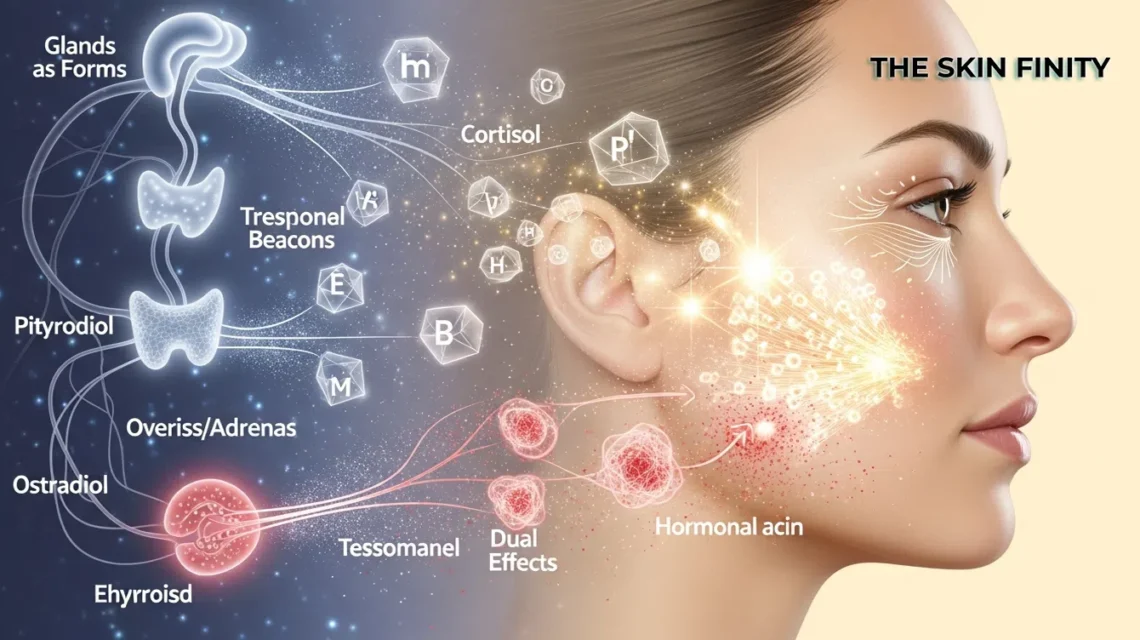
Hormones are potent chemical messengers made by your endocrine system. They travel in your bloodstream and trigger responses in various organs, including your skin, which has numerous receptors for them. This makes the skin’s response to hormonal fluctuations rapid and visible.
Androgens (Testosterone & DHT): The Oil Production Foremen
Often called ‘male hormones,’ androgens are crucial for everyone. They are the primary regulators of your sebaceous (oil) glands. When levels rise, they signal these glands to produce more sebum.
- While some oil is essential, excess sebum can mix with dead skin cells and clog pores.
- This creates the perfect environment for cystic acne and hormonal acne.
- This explains breakouts during puberty and conditions like Polycystic Ovary Syndrome (PCOS).
Estrogen: The Champion of Collagen and Hydration
If androgens manage oil, estrogen is the architect of youth. It is critical for:
- Collagen Production: It stimulates cells to produce collagen and elastin, maintaining skin firmness.
- Skin Hydration: It boosts hyaluronic acid, helping skin retain deep moisture.
- Skin Thickness & Healing: It promotes a strong skin barrier and efficient wound healing.
The decline of estrogen, especially during menopause, has dramatic consequences for skin.
Progesterone: The Complex Fluctuating Partner
Progesterone levels fluctuate monthly and throughout life. Its effects are complex:
- Can have a mild anti-androgen effect, calming skin for some.
- For others, it can stimulate sebum production, leading to pre-menstrual breakouts.
- Can cause temporary water retention, making pores appear larger.
Cortisol: The Stress Saboteur
Cortisol is your main stress hormone. Chronic stress leads to high cortisol, which:
- Breaks down collagen and elastin, accelerating wrinkles and sagging.
- Increases inflammation, worsening acne, rosacea, and eczema.
- Disrupts other hormones, creating a vicious cycle.
Thyroid Hormones: The Metabolic Pace-Setters
Your thyroid hormones regulate metabolism. Imbalances directly affect skin:
- Hypothyroidism (underactive): Can lead to dry skin, pallor, and cool skin.
- Hyperthyroidism (overactive): Can cause warm, moist, but thin and fragile skin.
Decoding the Signals: Hormonal Skin Changes Across a Lifetime
Your hormonal landscape evolves, and your skin tells that story.
The Monthly Cycle: Your Skin’s Hormonal Rollercoaster
- Follicular Phase (Post-Period): Rising estrogen leads to clearer, balanced skin.
- Ovulation: Peak estrogen gives a hydrated “glow.”
- Luteal Phase (Pre-Menstrual): Estrogen falls and progesterone surges, often causing oiliness, clogged pores, and hormonal acne on the jaw.
Pregnancy and Postpartum: The Great Surge and Recalibration
- Pregnancy: High estrogen can cause the “pregnancy glow” (thick, plump skin) but also melasma (“mask of pregnancy”) and sensitivity.
- Postpartum: Rapid hormonal shifts can trigger hair shedding and postpartum acne.
Perimenopause and Menopause: The Era of Estrogen Decline
The most significant skin changes occur here due to estrogen decline:
- Loss of Collagen: Up to 30% can be lost in the first five years post-menopause.
- Thinning of the Skin (Atrophy): Skin becomes more fragile.
- Extreme Dryness and Itch (Pruritus): Known as the menopause itch.
- Slower Healing: Cuts and injuries take longer to heal.
When Balance is Lost: Conditions of Hormonal Imbalance
Persistent skin issues can signal a deeper endocrine disorder:
- PCOS: Symptoms include resistant cystic acne, hirsutism (facial hair), and acanthosis nigricans (dark skin patches).
- Chronic Stress & Adrenal Dysregulation: High cortisol accelerates skin aging and inflammation.
- Thyroid Disorders: Both hyper- and hypothyroidism cause distinct skin issues like dryness or fragility.
Now What? Building a Supportive Skincare Routine
You can’t control hormones with creams, but you can support your skin’s resilience.
For Hormonal Acne and Excess Oil
- Gentle Cleanser: Use a sulfate-free, non-stripping face wash.
- Targeted Actives:
- Niacinamide (5-10%): For oil control and reducing inflammation.
- Salicylic Acid (BHA): Use 2-3 times weekly to clear pores.
- Retinoids: Start with OTC retinol or seek prescription tretinoin to normalize cell turnover.
- Barrier-Repair Moisturizer: A lightweight, non-comedogenic formula with ceramides.
- Sunscreen (Non-Negotiable): Use broad-spectrum SPF 30+ daily to prevent dark spots and collagen breakdown.
For Dryness, Thinning, and Aging (Estrogen Decline)
- Hydrating Cleanser: A creamy, milky, or oil-based formula.
- Hydration & Repair Serums:
- Hyaluronic Acid: Apply to damp skin to attract moisture.
- Peptides: Signal the skin to produce more collagen.
- Vitamin C: An antioxidant that protects and brightens.
- Rich, Nourishing Moisturizer: Look for ceramides, fatty acids, and squalane.
- Retinol or Prescription Retinoids: To combat collagen loss (use gently).
- Sunscreen: Essential to protect vulnerable, aging skin.
Lifestyle Frameworks: Supporting Balance from Within
- Diet for Balance: Focus on anti-inflammatory foods, fiber, healthy fats, and lean protein to help regulate blood sugar and insulin, which influence androgens.
- Stress Management is Skin Care: Prioritize sleep, mindfulness, and activities like yoga to lower cortisol.
- The Role of Supplements: Some find zinc (for acne), omega-3s (for inflammation/hydration), and vitamin D helpful. Always consult a healthcare professional first.
When to Seek Professional Help: Medical Pathways
If OTC and lifestyle changes aren’t enough:
- For Severe Hormonal Acne: Dermatologists may prescribe oral contraceptives, spironolactone (an anti-androgen), or isotretinoin.
- For Menopausal Skin: Discuss Hormone Replacement Therapy (HRT) with your doctor. Topical or systemic estrogen can improve moisture, thickness, and collagen.
- Addressing Underlying Conditions: Work with an endocrinologist to manage PCOS, thyroid issues, or chronic stress.
The Skin and Hormones: Empowered
Understanding your skin as a sophisticated communication system moves you from frustration to empowerment. A breakout isn’t a routine failure; it’s information.
The first step is to observe. Track your skin alongside your cycle, stress, and life stages. Build a routine that respects your skin’s changing needs. Remember, dermatology and endocrinology are allies.
Skincare is an act of holistic self-care—nourishing your body, managing stress, and listening to your skin’s story of resilience at every age.
Frequently Asked Questions (FAQ)
1. What’s the difference between hormonal acne vs. regular acne?
Hormonal acne is driven by internal hormonal shifts, typically causing deep, painful cystic acne along the lower face, jaw, and neck in cyclical patterns (like before your period). It often doesn’t respond to surface-level bacteria-fighting treatments.
2. What are the symptoms of hormonal imbalances and skin problems in women?
Look for sudden adult acne, very dry or overly oily skin, changes in facial hair, adult-onset eczema, thin skin, slow healing, and significant itching, especially during perimenopause and menopause.
3. Does HRT help menopausal skin?
Yes, Hormone Replacement Therapy (HRT) can help counteract menopausal skin changes. Estrogen treatments can improve moisture, thickness, and collagen, and relieve itching. This decision should be made in consultation with your doctor.
4. What is the best skincare routine for hormonal acne?
Focus on gentle cleansing, targeted actives, and barrier support:
- A gentle cleanser.
- A niacinamide serum.
- Salicylic acid 2-3 times per week.
- A retinoid.
- A non-comedogenic moisturizer.
- Daily sunscreen. Consistency is key.
5. How does the cortisol from stress cause wrinkles?
Chronically high cortisol breaks down collagen and elastin, the skin’s support structures. Combined with increased inflammation, this leads to accelerated fine lines, wrinkles, and sagging.
6. What are the skin signs of PCOS?
PCOS skin symptoms are driven by high androgens and include: severe cystic acne on the lower face, hirsutism (excessive hair growth), acanthosis nigricans (darkened skin in folds), and thinning scalp hair.
7. Are there natural remedies for skin dryness during perimenopause?
Yes. Stay hydrated internally, eat omega-3 rich foods (like fatty fish), use topical hyaluronic acid and ceramides, and use a humidifier. Avoid long, hot showers and harsh soaps that strip natural oils.
8. Can thyroid problems cause itchy skin?
Yes, particularly hypothyroidism. An underactive thyroid leads to dry skin due to reduced oil and sweat gland activity, which can cause generalized itching (pruritus). Treating the thyroid condition is essential.

 Bakuchiol as a Retinol Alternative: The Gentler Anti-Aging Option – Benefits, Comparison & How to Choose
  The Ultimate Skincare Routine for Night Shift Workers: Adapting Your Regimen to Irregular Sleep
  Fading Sun Damage: Your Expert Guide to Reversing Spots and Uneven Tone
  Understanding Skin Texture: Smooth vs. Rough and How to Improve It
  Niacinamide Benefits: The Science of Calming Inflammation and Evening Skin Tone
  Building a Minimalist Skincare Routine for Busy Professionals