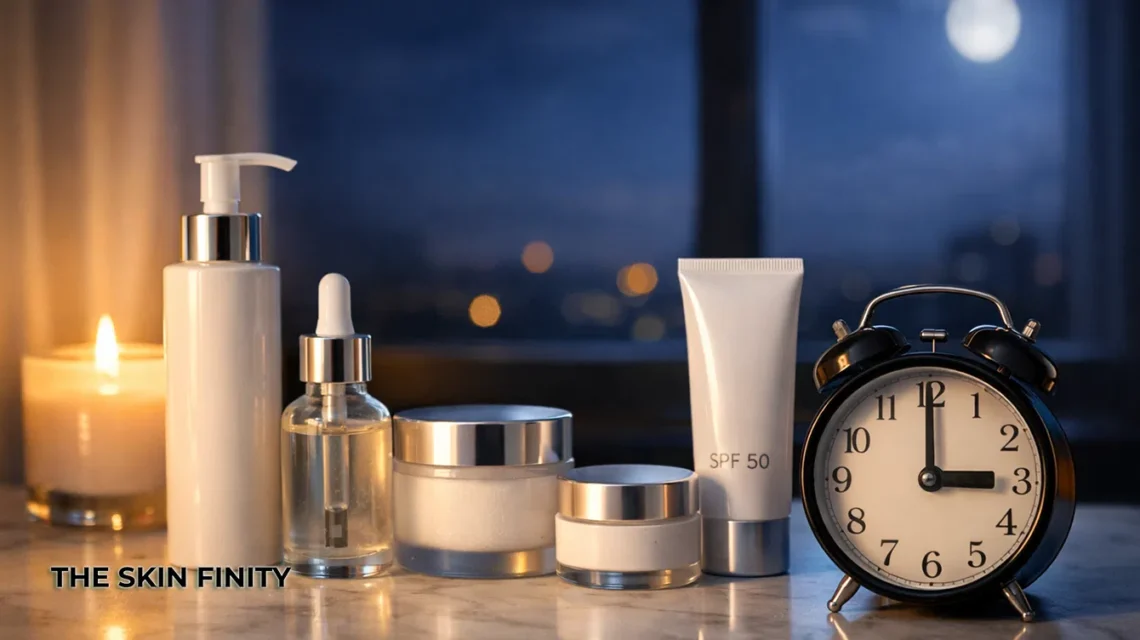
 The Skin Finity
 You’ve just finished a long, demanding night shift. The world is waking up, but your body is begging for rest. As you finally get home and catch your reflection, you see it: the dullness, the pronounced dark circles, the skin that looks as tired as you feel. For nurses, security guards, factory workers, and all overnight professionals, this is a familiar scene. Your sleep schedule is flipped, and your skin is paying the price. But what if you could work the night shift and still wake up with radiant, healthy skin? The secret lies in abandoning a traditional skincare routine and adapting a scientifically-informed, flexible approach designed for your unique rhythm.
This isn’t just about slapping on extra cream. It’s about understanding your skin’s internal clock—its circadian rhythm—and working with it, not against it. A dedicated night shift skincare routine can counteract the specific stresses of irregular hours, preventing premature aging, dehydration, and fatigue-related damage. This comprehensive guide will provide you with a step-by-step, adaptable plan, product insights, and profession-specific tips. We’ll transform your beauty routine for overnight workers from a reactive battle into a proactive strategy for glowing skin despite shift work.
The Science of Sleep Deprivation and Your Skin
Why Your Skin Suffers on Night Shifts: Understanding Circadian Rhythm Skincare
Your skin is far from a passive covering; it’s a dynamic, intelligent organ that operates on a precise 24-hour cycle. This circadian rhythm skincare principle dictates when your skin performs essential tasks like cell repair, hydration management, and protection.
During the day, your skin’s primary job is defense—fighting UV radiation, pollution, and pathogens. At night, in sync with natural sleep, it shifts into high-gear repair mode: blood flow increases, cell turnover accelerates, and damaged proteins are restored. This is the true essence of “beauty sleep.”
When you work nights and sleep days, this entire system is disrupted. The confusion caused by artificial light, altered meal times, and inverted sleep patterns sends conflicting signals to your skin’s biological clock. The result is a state of chronic stress that manifests in visible ways.
The Direct Effects of Irregular Sleep on Skin Health
The sleep deprivation skin effects are both measurable and profound:
- Increased Transepidermal Water Loss (TEWL): Stress hormones like cortisol compromise your skin’s barrier function, its moisture-sealing shield. This leads to increased water loss, leaving skin dehydrated, tight, flaky, and more reactive—a key concern for skincare for dry skin or exacerbated skincare for oily skin as it overproduces oil to compensate.
- Slowed Cell Renewal: The peak time for skin cell regeneration is missed. This leads to a buildup of dull, dead skin cells on the surface, resulting in a lackluster complexion and uneven texture.
- Collagen Breakdown & Inflammation: Elevated cortisol doesn’t just hurt your barrier; it also breaks down collagen and elastin—the proteins that keep skin firm and supple. This accelerates the appearance of fine lines and wrinkles. Cortisol also triggers inflammation, which can worsen conditions like acne, eczema, and rosacea.
- Poor Circulation & Fluid Dynamics: Lack of quality sleep reduces blood flow, causing paleness and preventing essential nutrients from reaching skin cells. Simultaneously, fluid can pool under the eyes, leading to the dreaded puffy eyes night workers know well, while poor drainage accentuates dark circles from night shifts.
Understanding these mechanisms is the first step to effectively combating them with a targeted skincare for shift workers.
Core Principles of a Shift Worker’s Skincare Philosophy
Adapting Skincare to Irregular Sleep: The 3 Non-Negotiable Rules
Before diving into product steps, adopt this mindset shift. Your skincare routine order isn’t dictated by the sun, but by your personal sleep-wake cycle.
- Protect, Don’t Just Correct. For shift workers, prevention is infinitely more powerful than cure. Focus on strengthening your skin barrier, applying antioxidants preemptively, and using sunscreen strategically to prevent damage before it starts.
- Hydration is Your #1 Priority. Combatting moisture loss is the cornerstone of any effective night shift skincare routine. Think of hydration as internal (drinking water) and external (using humectants like hyaluronic acid and emollients like ceramides for moisture loss).
- Timing is Everything (But Be Flexible). Your “morning” routine happens when you wake up, even if it’s 5 PM. Your “nighttime” routine happens before you start your shift, even if it’s 8 PM. Align your actives with this flipped schedule for maximum efficacy and minimal irritation.
Ready to build your routine? Let’s break it down step-by-step.
The Adaptable Skincare Routine for Night Shift Workers
This is your actionable, two-phase plan. Phase 1 is for post-shift recovery and pre-sleep. Phase 2 is for pre-shift preparation and protection.
Your “Morning” Routine (After Your Night Shift)
Goal: Remove impurities, soothe stress, deliver repair ingredients, and prep skin for sleep.
- First Cleanse (Makeup/SPF Removal): Start with a calming balm, oil, or micellar water to dissolve sunscreen, makeup, and pollutants. This is a ritual of removal, signaling to your body and mind that the work shift is over. Look for nourishing formulas with oils.
- Second Cleanse: Follow with a water-based, gentle cleanser for fatigue. Avoid foaming, sulfate-heavy cleansers that can strip a stressed barrier. Opt for creamy, milky, or hydrating gel formulas.
- Hydrating Toner/Essence: This is a non-negotiable step for hydrating skincare tips for overnight workers. A hydrating toner or essence with ingredients like hyaluronic acid, glycerin, or beta-glucan immediately replenishes moisture, plumps the skin, and prepares it to absorb subsequent treatments. Apply to damp skin.
- Antioxidant Serum: Here’s a crucial adaptation: Vitamin C serum application belongs in this “morning” routine. While you sleep (during the day), your skin enters its repair phase. Applying a potent antioxidant like L-ascorbic acid after your shift neutralizes the free radical damage accumulated during your “day” (the night) and provides a shield for the repair period ahead. It’s a powerful preemptive strike against aging.
- Eye Care: Directly target dark circles and puffiness with a dedicated eye product. Caffeine helps constrict blood vessels and reduce puffiness, while peptides and vitamin K can address dark circles. Gently pat it on with your ring finger.
- Moisturizer: Lock in all that goodness with a rich, nourishing moisturizer. This is where you reinforce your barrier. Seek out formulas containing ceramides for moisture loss, niacinamide for repair (which also helps regulate oil and reduce redness), and soothing ingredients like panthenol.
- Sunscreen? NO. This is the key difference. Since you are going directly to sleep in a dark room, you can and should skip sunscreen. This allows your skin to breathe and fully focus on repair without any product that needs to be washed off.
Your “Night” Routine (Before Your Shift)
Goal: Protect, treat, and prime skin for the demanding hours ahead.
- Gentle Cleanser: A quick, gentle cleanse to refresh the skin if you’ve been sweating or just waking up. You can often just use water or the same gentle cleanser from your morning routine.
- Treatment Serum: This is your active treatment window. For anti-aging for irregular work hours, this is when you’d apply retinol timing for night shifts. Since retinol can cause sun sensitivity, applying it before your night shift (when you’ll be indoors and away from the sun) is perfectly safe and effective. Alternatively, you can use a serum with peptides for skin regeneration or azelaic acid. Note: Do not use retinol and Vitamin C in the same routine. Alternate them.
- Moisturizer: Apply a moisturizer suitable for your skin type. If your work environment is dry (like a hospital or factory), you might prefer a richer cream. For oilier skin, a light lotion may suffice.
- SUNSCREEN IS MANDATORY: Never, ever skip this. Sunscreen for indoor night work is critical for two reasons: 1) If you have any daylight exposure on your commute home, you are protected. 2) Emerging research suggests that high-energy visible (HEV) blue light from screens and artificial lighting can also contribute to skin aging and pigmentation. A broad-spectrum SPF 30+ mineral (zinc oxide/titanium dioxide) or chemical sunscreen acts as an essential shield.
Weekly Treatments & Self-Care
- Hydrating Mask: 1-2 times per week on a day off, use a hydrating sheet mask or a leave-on sleep mask during your “night” (sleep) period for an intense moisture boost.
- Gentle Exfoliation: Once a week, substitute your treatment serum with a gentle AHA (like lactic acid) or BHA (salicylic acid) product to slough off dead cells and combat dullness. Always do this on a night you’re not using retinol.
- Facial Massage & Aromatherapy: Incorporate a 2-minute gua sha or lymphatic drainage massage with a facial oil to reduce puffiness and promote relaxation. Essential oils for night shift recovery like lavender or chamomile in a diffuser can enhance your sleep environment.
Building Your Arsenal: Product Recommendations by Concern
Navigating the world of best skincare products can be overwhelming. Focus on ingredients first. Here’s a guide to building a budget skincare routine for irregular schedules or investing in key pieces.
| Skin Concern | Key Ingredients to Look For | Product Type Recommendations |
|---|---|---|
| Dehydration & Barrier Repair | Hyaluronic Acid, Ceramides, Fatty Acids, Squalane, Niacinamide | Hydrating toners, barrier repair creams, facial oils. |
| Dullness & Uneven Texture | Peptides, Glycolic Acid (AHA), Lactic Acid (AHA), Fruit Enzymes | Gentle chemical exfoliants (1x/week), peptide serums. |
| Dark Circles & Puffiness | Caffeine, Vitamin K, Peptides, Haloxyl | Cooling gel eye creams, targeted eye serums. |
| Anti-Aging & Fine Lines | Retinol, Bakuchiol (plant-based alternative), Matrixyl | Night treatment serums (apply pre-shift). |
| Protection & Prevention | Vitamin C (L-ascorbic acid), Ferulic Acid, Vitamin E, Zinc Oxide | Antioxidant serums (apply post-shift), broad-spectrum sunscreen. |
Pro Tip for a Simple Skincare for Nurses on Night Duty: Keep a kit in your locker with travel-sized: a gentle cleanser, a hydrating mist, a tube of moisturizer, and lip balm. A quick refresh during a break can work wonders.
Tailored Tips for Specific Professions & Schedules
Your environment matters. Here’s how to tweak your beauty routine for overnight workers based on your field:
- For Healthcare Workers (Nurses, Doctors): Your skin faces constant hand sanitizing, dry air, and mask friction. Focus on gentle cleansers and ultra-rich barrier creams. Apply a thick moisturizer before putting on your mask to create a protective layer. A hydrating facial mist can be a quick pick-me-up.
- For Factory/Industrial Workers: Exposure to dust, grease, or industrial pollutants necessitates a thorough double-cleanse at the end of your shift. Follow immediately with barrier-repairing ingredients like ceramides and centella asiatica.
- For Security/Office Night Workers: Long hours in climate-controlled rooms under fluorescent lights lead to dehydration. A small desktop humidifier is a game-changer. Never skip your pre-shift sunscreen for indoor night work to combat ambient HEV light from monitors.
Your Radiant Skin, On Your Schedule
Mastering a skincare routine for night shift workers is an empowering act of self-care. It’s a declaration that your well-being matters, regardless of your work hours. By flipping the script on traditional routines—prioritizing barrier health, smart hydration, and strategic timing—you give your skin the tools it needs to thrive in a non-traditional schedule.
Remember, consistency over perfection is key. Start by adapting one or two steps, like adding a post-shift antioxidant and a pre-shift sunscreen. Listen to your skin; it will tell you what it needs. You have the power to combat the sleep deprivation skin effects and reveal the resilient, glowing complexion underneath. Embrace this adapted nighttime skincare routine as your secret weapon for looking and feeling refreshed, no matter what the clock says.
FAQ: Your Skincare for Irregular Schedules Questions, Answered
1. What is the best nighttime skincare routine for night shift workers?
The “best” routine is the one aligned with your sleep cycle. For a night shift worker, the true nighttime skincare routine (for repair) happens after your shift, before your day sleep. This routine should focus on cleansing, hydration, antioxidants (like Vitamin C), and barrier repair, omitting sunscreen. Your “day” routine (before work) should include cleansing, treatment actives (like retinol), moisturizer, and mandatory sunscreen.
2. How does irregular sleep affect my skin?
Irregular sleep disrupts your skin’s circadian rhythm, leading to a cascade of effects. Cortisol rises, breaking down collagen and weakening your skin’s moisture barrier, causing dryness and wrinkles. Natural repair processes are mis-timed, resulting in dullness. Poor circulation and fluid pooling create dark circles and puffiness. Essentially, your skin is in a state of constant stress, accelerating aging and compromising its health.
3. When should I apply retinol if I work nights?
Apply retinol during your “night” routine—which is before you start your shift. Since retinol can increase sun sensitivity and is ideally used on skin not exposed to UV light, applying it before an overnight indoor shift is perfect. It gives the ingredient a long, uninterrupted period to work without the risk of sun damage. Never apply it before going to sleep during the day if you have any potential sun exposure afterward.
4. Do I really need sunscreen if I sleep during the day and work indoors at night?
Absolutely. Sunscreen for indoor night work is non-negotiable for two reasons. First, you likely have some exposure to UV rays during your commute home at sunrise. Second, emerging science indicates that blue light (HEV) from screens and intense artificial lighting may contribute to pigmentation and skin aging. A broad-spectrum SPF 30+ provides a critical protective layer against these environmental stressors.
5. What are the best products for dark circles caused by night shifts?
Look for eye products containing caffeine to constrict blood vessels and reduce puffiness, vitamin K to address broken capillaries, and peptides to strengthen thin under-eye skin. A cooling metal-tip applicator can help with depuffing. Also, ensure your overall routine is hydrating, as dehydration worsens dark circles. Remember, topical products help, but quality sleep (when you can get it) is the ultimate cure.
6. Can you suggest a simple, budget skincare routine for irregular schedules?
Yes! A simple skincare for nurses on night duty or any shift worker can be effective. AM (Post-Shift): 1) Affordable gentle cleanser. 2) Basic hyaluronic acid serum. 3) Drugstore moisturizer with ceramides. PM (Pre-Shift): 1) Splash with water or use cleanser. 2) A retinol or treatment serum (2-3x/week). 3) Same moisturizer. 4) Crucially, a budget-friendly broad-spectrum sunscreen. This 4-product core covers cleanse, treat, moisturize, and protect.
7. How can I adapt my nighttime routine to day sleep?
The key is environmental control for your “beauty sleep.” Use blackout curtains or a sleep mask to create pitch darkness. Keep the room cool. Use a silk or satin pillowcase to reduce friction on skin. Apply a slightly thicker, more occlusive moisturizer or a sleep mask before bed to maximize hydration during your sleep period. Consider white noise to block daytime sounds.
8. What is the most important step in a skincare routine for sleep-deprived skin?
If we must choose one, it’s hydration. Sleep-deprived skin loses water rapidly due to a stressed barrier. A robust hydrating step—using a humectant serum like hyaluronic acid on damp skin, followed by a moisturizer with ceramides—will do more to instantly improve plumpness, dullness, and resilience than any other single step. Hydration is the foundation for all other treatments to work effectively.

 The Invisible Architects: How Your Hormones Dictate Your Skin’s Health, Glow, and Age
  Herbal Extracts in Skincare: Aloe Vera, Green Tea, and Chamomile
  Fading Sun Damage: Your Expert Guide to Reversing Spots and Uneven Tone
  Understanding Skin Texture: Smooth vs. Rough and How to Improve It
  Niacinamide Benefits: The Science of Calming Inflammation and Evening Skin Tone
  Building a Minimalist Skincare Routine for Busy Professionals