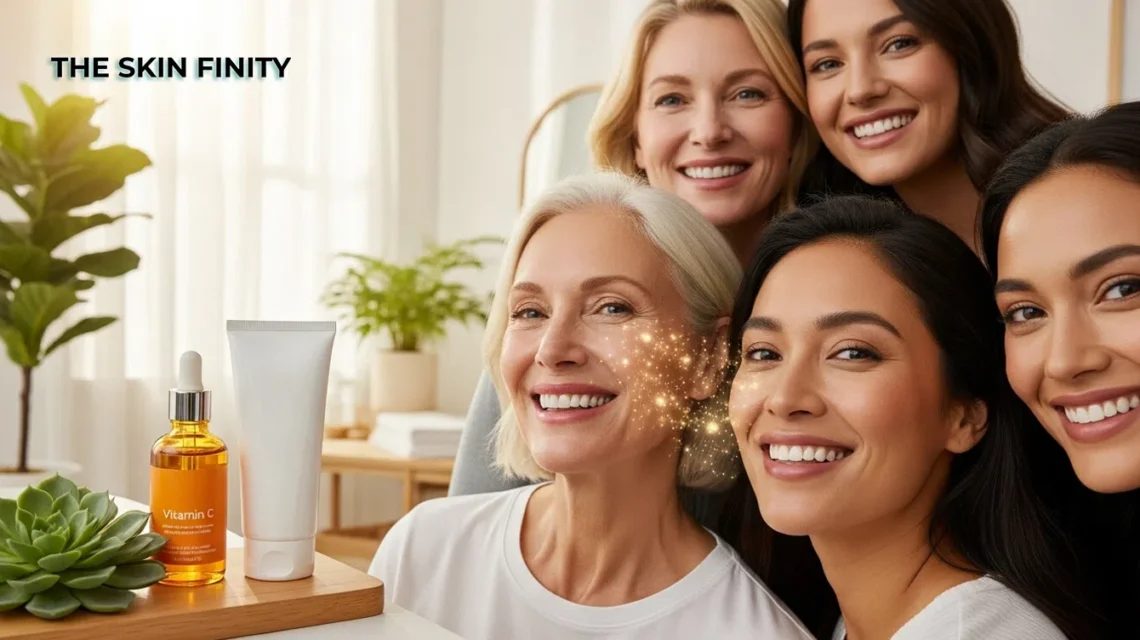
 The Skin Finity
 As you apply your moisturizer in the morning, you see them: a few faint brown spots on your cheek, a patch of skin on your forehead that’s a little duller than the rest, and the ghost of a tan line that lingeringly haunts your skin. If you are looking at the legacy of past sun exposure, you are not the only one. More than 90% of skin aging, including wrinkles, skin elasticity, and discoloration, are the result of sun exposure. Fading sun damage and achieving radiant skin is one of the most common skincare goals, and it is never too late to start.
Sun induced hyperpigmentation, including sun spots, dark patches, and an uneven skin tone, is a defense mechanism of the skin that is out of control. Melanocytes react to damage from UV rays by increasing the production of the skin pigment melanin. This process can become dysregulated, leading to concentrated deposits of melanin that surface as spots. This is more than an aesthetic concern, as it is a visible sign of the underlying damage that the skin has sustained from UV rays.
The prevention of further sun damage is vital, but the good news is that it is possible to reverse the damage. Although it is a relatively new field of study, the world of hyperpigmentation treatment has come a long way and now includes everything from powerful at-home skincare treatments to highly sophisticated clinical procedures. This is your ultimate guide. This guide will break down the science of the spots, help you construct a personalized routine using the most effective products for uneven skin tone from sun exposure, review professional options for sun spots and hyperpigmentation, and reinforce the routines that protect skin from damage. Here begins the journey to a more even and glowing complexion.
Understanding Your Foe: The Science of Sun Damage and Hyperpigmentation
Before the solutions, let’s discuss the problems. Not all spots are the same so not all spots will require the same solutions. Recognizing the problems should provide some clues about the best solutions.
Photoaging extends beyond traditional sunburn damage. UVA and UVB rays cause cells to generate free radicals which breakdown collagen and elastin, promoting wrinkles. At the same time, these rays over-activate the basal layer of the skin which causes melanin overproduction. Melanin serves as a biological shield against the sun, but over-activation, especially uneven and repeated, results in post-inflammatory pigmentation. These pigmented stains remain on the skin undetected for long periods of time, taking months or even years to manifest.
Types of Sun-Induced Discoloration: More Than Just “Age Spots”
- Solar Lentigines (Sun Spots/Age Spots/Liver Spots): These are the flat, regular brown to black spots that develop on skin that have been sun exposed (face, shoulders, hands). They are a result of excessive cumulative sun exposure and a classic marker of sun related skin pigmentation.
- Freckles (Ephelides): Freckles are primarily a genetic phenomenon, but their development is darkened and accelerated by sun exposure. They differ from solar lentigines in that they may disappear in winter in a process known as winter freckle loss.
- Vascular Mottling and Uneven Diffuse Skin Discoloration: an overall uneven skin brightness where some patches are discolored by brown or sallow pigmentation and others are brighter. This is especially apparent on cheeks and foreheads.
- Understanding Melasma: Melasma is often called the “mask of pregnancy,” but is a more complex form of hyperpigmentation of endocrine origin, and is aggravated by the sun. Treatments for melasma may often ghost treat sun spots, but may require add on hormonal therapies.
- A Note on Skin Tone Considerations: While those of Caucasian descent may see more pronounced reddening and freckling, those with Fitzpatrick IV-VI skin types and of African descent, may have more prominent post inflammatory hyperpigmentation and may experience sun damage as more chronic conditions, presenting as ashen or hyperpigmented patches. These conditions may require a more gradual approach for pigmentation reduction to avoid further inflammation.
The Cornerstone of Correction: Your At-Home Skincare Arsenal
The most effective path to fading sun damage is a consistent, targeted at-home routine. Think of this as the daily, non-negotiable work that creates the foundation for all other treatments. The goal is threefold: to inhibit new melanin production, to accelerate the removal of existing pigmented cells, and to protect the skin barrier throughout the process.
The Cornerstone of Correction: Your At-Home Skincare Arsenal
The most effective path to fading sun damage is a consistent, targeted at-home routine. Think of this as the daily, non-negotiable work that creates the foundation for all other treatments. The goal is threefold: to inhibit new melanin production, to accelerate the removal of existing pigmented cells, and to protect the skin barrier throughout the process.
How to Fade Sun Damage on Face Naturally (The Actives-Driven Approach)
“Naturally” here refers to using nature-derived and scientifically formulated ingredients, not DIY kitchen mixes. The following actives are the gold standards for skin brightening and tone evening.
- Vitamin C (L-ascorbic acid): This antioxidant powerhouse is your morning essential. It works by interrupting the melanin production pathway (inhibiting the enzyme tyrosinase) and neutralizing free radicals before they can trigger pigmentation. Research consistently shows that topical vitamin C can significantly improve uneven skin tone and brighten dark spots on skin. Look for stable, well-formulated serums in opaque, airtight packaging.
- Retinoids (Retinol, Prescription Retin-A): The undisputed champion of skin renewal. Retinoids accelerate cellular turnover, helping to “slough off” pigmented surface cells and reveal the fresher, less pigmented skin beneath. They also boost collagen, addressing the textural damage that accompanies sun spots. Retinol for sun damage and age spots is a long-game strategy with profound results.
- Niacinamide (Vitamin B3): A must for its versatility and gentleness. Niacinamide benefits for uneven skin tone are impressive: it reduces inflammation, inhibits the transfer of melanin to skin cells, and strengthens the skin barrier. This makes it ideal for sensitive skin or for use alongside stronger actives like retinol to mitigate irritation.
- Alpha Hydroxy Acids (AHAs – Glycolic, Lactic): These water-soluble acids provide exfoliation for spots by dissolving the “glue” that holds dead, pigmented skin cells to the surface. Regular use leads to smoother, brighter skin and allows your other treatment products to penetrate more effectively.
- Other Targeted Actives: For stubborn discoloration correction, look for formulas containing:
- Tranexamic Acid: A rising star that blocks UV-induced plasmin activity, a key trigger for melanocyte activation. Excellent for melasma and persistent spots.
- Kojic Acid & Azelaic Acid: Both work as tyrosinase inhibitors to suppress melanin production, with azelaic acid offering additional anti-inflammatory benefits.
A Quick-Reference Table: Your 2024 Dark Spot Correctors
| Ingredient | Primary Action | Best For Skin Type | Product Suggestion |
|---|---|---|---|
| Vitamin C | Antioxidant, Brightens, Inhibits Melanin | Most, but start low for sensitive | SkinCeuticals C E Ferulic, Paula’s Choice C15 Super Booster |
| Retinol | Increases Cell Turnover, Renews Skin | Not for very sensitive; start slowly | Naturium Retinol Complex 2.5%, CeraVe Resurfacing Retinol Serum |
| Niacinamide | Blocks Pigment Transfer, Strengthens Barrier | All, especially sensitive & oily | Glossier Super Pure Serum, La Roche-Posay Mela B3 Serum |
| Tranexamic Acid | Targets UV & Inflammation Pathways | Stubborn melasma & post-acne marks | Cos de Baha Tranexamic Acid Serum, Naturium Tranexamic Topical Acid |
| Glycolic Acid (AHA) | Exfoliates Surface Pigmented Cells | Normal to Oily (not for very sensitive) | The Ordinary Glycolic Acid 7% Toner, Pixi Glow Tonic |
Building Your Routine: A Step-by-Step Guide for All Skin Types
Consistency is everything. Here’s how to assemble these powerhouse ingredients into a morning and evening ritual.
Morning Routine: Defense and Brightening
- Gentle Cleanser: Use a mild, non-stripping formula to prep skin.
- Antioxidant Serum: Apply your Vitamin C serum for fading dark spots and uneven tone to dry skin. This is your primary brightening and protective step.
- Moisturizer: A lightweight, barrier-supporting formula. Hyaluronic acid-based gels are great for daytime.
- Sunscreen: The MOST CRITICAL STEP. Use a broad-spectrum SPF 30 (SPF 50 is better) every single day, rain or shine. This is the best sunscreen to prevent uneven skin tone from worsening. Reapply every 2 hours if outdoors.
Evening Routine: Repair and Renewal
- Double Cleanse: Start with an oil-based cleanser to remove sunscreen/makeup, followed by a water-based cleanser.
- Treatment Serum: Apply a treatment like a niacinamide or tranexamic acid serum. Wait a few minutes for absorption.
- Retinol Treatment (2-3 nights per week): On non-exfoliating nights, apply your retinol for sun damage. Start with a pea-sized amount. Never use retinol and AHA/BHA exfoliants on the same night.
- Moisturizer: Lock in moisture with a richer, reparative night cream.
Weekly Treatment: The Power of Exfoliation
Once or twice a week, substitute your evening treatment serum with an at-home chemical peel for hyperpigmentation and sun spots. Use a leave-on AHA exfoliant (like glycolic or lactic acid) for 10-20 minutes before rinsing and following with moisturizer. Skip retinol on these nights.
Skin-Type Tweaks:
- Dry/Sensitive: Focus on hydration. Buffer retinol with moisturizer, use lactic acid (gentler than glycolic), and prioritize niacinamide.
- Oily/Acne-Prone: Opt for lightweight, non-comedogenic formulas. Salicylic acid (BHA) can be added for clogged pores.
- Darker Skin Tones: Proceed with caution on strong acids and lasers. Prioritize tyrosinase inhibitors (Vitamin C, Tranexamic, Kojic Acid) and always, always patch test.
Professional Power: In-Office Treatments for Stubborn Sun Damage
When at-home care needs a boost, dermatologists and licensed aestheticians offer tools that can accelerate sun damage reversal significantly. These are ideal for deep, defined solar lentigines or when you desire faster results.
Laser and Light Therapies
- IPL (Intense Pulsed Light): Often called a “photofacial,” IPL uses broad-spectrum light to target melanin. The pigment absorbs the light and is shattered, leading to the spots flaking off over days. Excellent for diffuse sun damage. Pros: Effective for fair to medium skin tones, minimal downtime. Cons: Not suitable for very dark skin, requires multiple sessions.
- PicoSure/PicoWay Lasers: These picosecond lasers deliver energy in trillionths of a second, shattering pigment into dust with less thermal damage. They are the gold standard for laser treatment for fading sun damage spots, especially on darker skin tones, with lower risk of PIH.
- Fraxel Dual Laser: This fractional laser creates micro-injuries in the skin, triggering a powerful healing response that replaces damaged, pigmented tissue with new collagen and skin. It treats both pigment and texture (fine lines, scars).
Professional-Grade Chemical Peels
Performed by a professional, these peels use high concentrations of acids (like TCA or glycolic) to deeply exfoliate the epidermal and sometimes dermal layers. This forcibly removes pigmented cells, revealing dramatically smoother, more even skin underneath. Downtime can range from a few days of peeling to a week.
Other Clinical Options
- Microneedling: Tiny needles create channels that trigger collagen production and allow for better penetration of topical brightening agents (like vitamin C) applied during the procedure.
- Cryotherapy: Liquid nitrogen is applied briefly to individual sun spots, freezing and destroying the targeted pigment cells.
| Treatment | Best For | Typical Sessions | Downtime | Consideration |
|---|---|---|---|---|
| IPL Photofacial | Diffuse redness/brown spots, Fair-Medium Skin | 3-5 | 1-3 days | Sun avoidance critical; not for dark skin. |
| PicoSure Laser | Stubborn sun/age spots, All Skin Tones | 1-3 | 1-2 days (mild swelling) | Higher per-session cost, highly targeted. |
| Medium Chemical Peel | Moderate-severe sun damage, Texture | 1 | 7-14 days | Significant peeling; requires pre-care. |
The Role of Lifestyle and Supportive Natural Remedies
True skin health comes from within. While topical treatments do the heavy lifting, your lifestyle can support the process of fading age spots and enhancing overall radiance.
Diet and Supplements for Skin Health
A diet rich in antioxidants helps combat the free radicals that drive pigmentation. Focus on:
- Vitamin C & E: Citrus, berries, bell peppers, almonds, sunflower seeds.
- Polyphenols: Green tea, dark chocolate, berries.
- Lycopene: Cooked tomatoes, watermelon.
- Consider: Oral supplements like Heliocare (containing Polypodium leucotomos extract) have shown promise in clinical studies as an “internal sunscreen,” providing additional protection against UV-induced damage.
A Realistic Look at Natural Remedies
The internet is full of home remedies for sun-induced pigmentation. Let’s evaluate them safely:
- Aloe Vera: Soothing and anti-inflammatory. While it won’t erase spots, pure aloe gel can support barrier health during treatments.
- Licorice Root Extract: Contains glabridin, a recognized tyrosinase inhibitor. Look for it in formulated serums, not as a DIY paste.
- Vitamin E Oil: A good moisturizing occlusive, but its direct spot-fading ability is minimal.
- ⚠️ A Critical Warning: NEVER apply straight lemon juice, apple cider vinegar, or undiluted essential oils to your face. Their extreme acidity and phototoxicity can cause severe chemical burns, destroy your skin barrier, and lead to catastrophic post-inflammatory hyperpigmentation (PIH), especially on darker skin.
The Non-Negotiable: Sun Protection to Prevent and Protect Your Progress
All the hyperpigmentation treatment in the world is a futile, expensive effort without rigorous sun protection. UV exposure will re-trigger melanocytes, undoing months of progress in days. Sunscreen is not just a product; it’s the foundation of your entire skin care for dark spots strategy.
- Mineral vs. Chemical: Mineral sunscreens (Zinc Oxide, Titanium Dioxide) sit on top of the skin, reflecting UV rays. They are less irritating and effective immediately upon application. Chemical sunscreens absorb into the skin and convert UV rays to heat. Both are effective; choose based on your skin’s tolerance.
- Application is Key: Use a shot-glass amount (1 oz.) for your body and a nickel-sized amount for your face and neck. Apply it as the absolute last step of your morning routine, 15 minutes before sun exposure. Reapply every two hours of direct exposure, or immediately after swimming or sweating.
Your Sun Damage Reversal Questions, Answered
How can I fade sun spots at home safely?
Build a consistent routine around a vitamin C serum in the AM and a retinol or niacinamide serum in the PM. Add a weekly AHA exfoliant. The cornerstone is daily, broad-spectrum SPF 30+. Patience is key—expect to see initial results in 6-8 weeks, with significant improvement at 3-4 months.
What is the best cream for uneven skin tone?
Look for a “brightening” or “even tone” moisturizer that contains one of the key actives mentioned (niacinamide, licorice, kojic acid). CeraVe Skin Renewing Day Cream (with niacinamide and peptides) or Olay Luminous Tone Perfecting Cream are excellent, accessible options. Remember, serums are often more potent for treatment.
Does vitamin C really help with hyperpigmentation?
Yes, unequivocally. L-ascorbic acid (vitamin C) is one of the most well-researched ingredients for inhibiting melanin production and providing antioxidant defense. It works best when used consistently in the morning under sunscreen.
How long does it take to reverse sun damage?
This depends on the depth of the damage and your chosen methods. With a rigorous at-home regimen, surface-level discoloration can lighten in 2-3 months. Deeper, longstanding spots may require 6-12 months of consistent care or professional interventions for significant age spots removal.
Is laser treatment safe for dark spots on darker skin tones?
Yes, but provider selection is critical. Older laser technology (like some IPL) carried high risks for darker skin. Picosecond lasers (PicoSure/PicoWay) are now considered much safer for Fitzpatrick skin types IV-VI. Always consult a board-certified dermatologist or practitioner with extensive experience treating pigmentation in darker skin.
What exactly causes sun-induced uneven skin tone?
It’s caused by chronic exposure to UVA/UVB rays, which trigger an overproduction and uneven distribution of melanin in the skin. This cumulative damage leads to solar lentigines (spots) and general mottling (solar lentigines treatment addresses this).
Are natural ingredients like lemon or apple cider vinegar good for fading age spots?
No. They are highly dangerous. Their extreme, uncontrolled acidity can cause severe chemical burns, destroy your skin barrier, and lead to even worse discoloration (post-inflammatory hyperpigmentation). Always use scientifically formulated, pH-balanced products.
What’s the best sunscreen to prevent further sun damage?
The best sunscreen is one you will wear every single day. For preventing uneven skin tone, look for broad-spectrum SPF 30 or higher. Popular, cosmetically elegant choices include EltaMD UV Clear Tinted (great for sensitive/acne-prone skin), La Roche-Posay Anthelios Melt-in Milk, and Supergoop! Unseen Sunscreen.
What’s the difference between melasma and sun spots?
Sun Spots (Solar Lentigines) are directly caused by sun exposure, are usually discrete spots, and respond well to lasers and topicals. Melasma is hormonally influenced (pregnancy, birth control), appears as symmetrical patches (cheeks, forehead), is worsened by sun and heat, and requires a more nuanced, gentle approach often involving tranexamic acid for dark spots from sun and strict sun avoidance.
How should I introduce retinol into my routine for fading pigmentation?
Start low and slow. Use a pea-sized amount of a low-concentration retinol (0.25% or 0.3%) 1-2 nights per week, applied to dry skin after cleansing, followed by moisturizer. After 2-4 weeks, if no irritation occurs, increase to 2-3 nights per week. Never use it the same night as an AHA/BHA exfoliant.
Your Path to a Radiant, Even Complexion
The journey of fading sun damage is a marathon, not a sprint. It requires a blend of knowledge, consistency, and patience. The spots and uneven tone that took years to develop won’t vanish overnight, but with the right approach, they will fade.
- Your Daily Non-Negotiables: A vitamin C serum in the morning and a broad-spectrum sunscreen are your most powerful daily tools for prevention and correction.
- Your Nightly Renewal: Incorporate retinol and niacinamide to accelerate cellular turnover and block pigment transfer.
- Know When to Call a Pro: For deep or stubborn dark spots on skin, professional treatments for sun spots and hyperpigmentation like picosecond lasers offer a faster, more definitive solution.
- Protection is Forever: Sunscreen is not seasonal. It is the eternal guardian of all your progress and the ultimate anti-aging skincare for sun damaged skin.
Reversing sun damage is one of the most powerful acts of skincare self-care. It’s about reclaiming the natural, even radiance of your skin and investing in its long-term health. By understanding the science, curating a smart routine, and committing to sun protection, you are not just treating spots—you are fostering resilient, luminous skin for years to come.
Have you started your journey to fade sun damage? Share your favorite brightening product or ask your specific question in the comments below! For more expert guides on building a radiant complexion, subscribe to The Skin Finity.

 The Invisible Architects: How Your Hormones Dictate Your Skin’s Health, Glow, and Age
  The Ultimate Skincare Routine for Night Shift Workers: Adapting Your Regimen to Irregular Sleep
  Herbal Extracts in Skincare: Aloe Vera, Green Tea, and Chamomile
  Understanding Skin Texture: Smooth vs. Rough and How to Improve It
  Niacinamide Benefits: The Science of Calming Inflammation and Evening Skin Tone
  Building a Minimalist Skincare Routine for Busy Professionals