 The Skin Finity
 Have you ever diligently applied a rich moisturizer, only to find your skin still feels tight and looks flaky by midday? Or perhaps your forehead is shiny with oil, yet your cheeks feel as parched as paper? If this sounds familiar, you’re not alone. The confusion between dry vs dehydrated skin is one of the most common—and costly—misunderstandings in skincare. Using the wrong products for your skin’s actual need is like trying to water a cactus with oil. It simply won’t work.
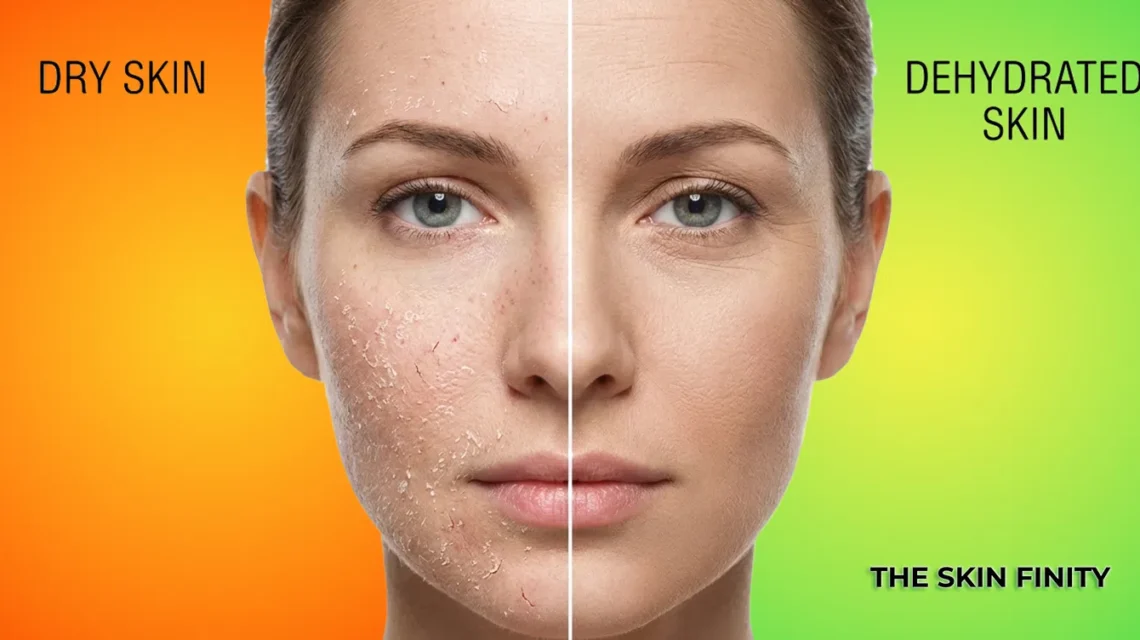
Here’s the fundamental truth many miss: Dry skin is a skin type, while dehydrated skin is a skin condition. One is about a lack of oil; the other is about a lack of water. And yes, you can have an oily skin type that is severely dehydrated—a frustrating paradox that leads many down the wrong product path.
Understanding the difference between dry and dehydrated skin is the master key to unlocking a truly effective routine. This guide will act as your decoder. We’ll dive into the science, give you simple self-diagnosis tools like the pinch test for dehydrated skin, and provide clear, actionable routines to hydrate and nourish your skin back to health. Let’s resolve the confusion and get your glow back.
The Core Difference: Skin Type vs. Skin Condition
To fix the problem, you must first name it correctly. The dry skin vs dehydrated skin debate hinges on one critical distinction: permanence versus temporariness.
What is Dry Skin? (A Chronic Lack of Oil)
Dry skin is a genetic skin type. It’s characterized by a persistent, often lifelong, underproduction of sebum—the natural oils your sebaceous glands produce. Think of your skin’s lipid barrier as a brick wall. The skin cells are the bricks, and lipids (oils, ceramides, cholesterol) are the mortar that holds them together, sealing in moisture and protecting against irritants.
In dry skin, there’s a deficit of this “mortar.” The barrier is compromised, leading to increased Transepidermal Water Loss (TEWL). It’s not that there’s no water inside; it’s that the barrier can’t hold onto it effectively. This is why dry skin often feels rough, looks flaky, and is prone to sensitivity year-round, worsening in harsh climates.
What is Dehydrated Skin? (A Temporary Lack of Water)
Dehydrated skin, on the other hand, is a condition. It signifies a lack of water content in the top layer of the skin (the stratum corneum). Crucially, any skin type—oily, combination, normal, or dry—can become dehydrated.
Imagine your skin cells as sponges. When fully hydrated, they are plump, springy, and reflect light beautifully. When dehydrated, these sponges are shriveled and deflated. Your skin’s ability to hold water is compromised, but its oil (sebum) production may be completely unaffected—or even in overdrive. This is why the condition is so sneaky and often mistaken for other issues.
Dry vs. Dehydrated: A Side-by-Side Comparison
| Feature | Dry Skin (Type) | Dehydrated Skin (Condition) |
|---|---|---|
| Primary Cause | Lack of oil (sebum) / lipids | Lack of water |
| Skin Feel | Rough, flaky, sometimes itchy | Tight, papery, can feel “crepey” |
| Skin Look | Dull, may show visible scaling | Dull, with temporarily accentuated fine lines |
| Pores | Typically small, less visible | Can be any size (often normal or large) |
| Oil Production | Low | Can be low, normal, or even high (oily but dehydrated) |
| Key Identifier | A persistent, full-face experience | A temporary state that can come and go |
How to Tell if Your Skin is Dry or Dehydrated: Symptoms & Simple Tests
Listening to your skin is the first step. Let’s decode the signs of dehydrated skin and dry skin, and use a famous at-home check.
Clear Signs of Dry Skin
- Persistent Tightness: Especially after cleansing.
- Visible Flaking: Small, white flakes, particularly on cheeks and around eyebrows.
- Rough Texture: Skin doesn’t feel smooth to the touch.
- Dullness & Redness: Lack of radiance and a tendency towards irritation.
- Absorbs Moisturizer Instantly: Rich creams seem to disappear without a trace.
Key Signs of Dehydrated Skin
- The Tightness-Shine Paradox: Skin feels tight and uncomfortable, yet may appear oily on the surface (a classic oily but dehydrated skin scenario).
- Dull, “Tired” Looking: Lacks that healthy, plump radiance.
- Accentuated Fine Lines: When skin is dehydrated, fine lines on the forehead and under eyes become much more noticeable. These often “plump up” and become less visible once hydration is restored.
- Increased Sensitivity: A weakened moisture barrier can make skin react more easily.
- Dark Under-Eye Circles: Dehydration can make the triangular area under eyes appear more shadowy.
The Pinch Test for Dehydrated Skin
This is a popular, though basic, diagnostic tool. Be gentle.
- Using your index finger and thumb, gently pinch a small area of your cheek, chest, or the back of your hand.
- Hold for a few seconds and release.
- Observe: If your skin snaps back immediately, it’s likely well-hydrated. If it takes a few moments to return to its original shape, or if it shows fine lines (a “crepey” texture) during the pinch, it’s a strong symptom of dehydrated skin.
Note: This test is a helpful guide, not a medical diagnosis. Severe or persistent issues should always be discussed with a dermatologist.
Unpacking the Causes: Why is My Skin Like This?
Understanding the root cause helps you prevent the problem from recurring.
What Causes Dry Skin?
- Internal: Genetics, natural aging (oil production declines), hormonal changes (e.g., menopause), and certain skin conditions like eczema or psoriasis.
- External: Cold, windy climates with low humidity; hot, dry indoor heating; long, hot showers; harsh soaps and foaming cleansers that strip lipids; and over-exfoliation.
What Causes Dehydrated Skin?
- Internal: Inadequate water intake, a diet high in sodium and processed foods, excessive alcohol or caffeine consumption (both are diuretics), high stress levels, and poor sleep.
- External: Air conditioning and forced-air heating (they strip moisture from the air); air travel; using skincare products with high concentrations of drying alcohol, fragrance, or irritants; and, ironically, using products meant for oily skin (like strong astringents) when your skin is simply dehydrated.
How to Fix It: Targeted Solutions and Routines
Now for the actionable part. Here’s your roadmap to treating each issue correctly.
The Ultimate Skincare for Dehydrated Skin
Goal: Flood the skin with water and enhance its ability to retain it.
Key Philosophy: Layer hydration and seal it in.
- Cleanse Gently: Use a non-stripping, creamy, or milky cleanser. Avoid hot water.
- Hydrate Immediately: Apply a hydrating toner or essence on damp skin. Look for hyaluronic acid, glycerin, aloe vera, or rose water.
- Treat with a Hydrating Serum: This is your powerhouse step. A serum with hyaluronic acid for dehydrated skin is a gold-standard choice. It acts as a moisture magnet. Pro Tip: Apply to slightly damp skin to pull that water in.
- Seal with a Light Moisturizer: Lock in all that hydration with a gel-cream or light lotion. It should feel quenching, not heavy.
- Weekly Boost: Use a hydrating sheet mask 1-2 times per week.
Lifestyle & Tools: Increase your water intake consistently, use a humidifier in your bedroom, and limit direct blasts from heating/cooling vents.
Effective Dry Skin Treatment and Remedies
Goal: Replenish lipids and repair the damaged skin barrier.
Key Philosophy: Nourish, protect, and prevent moisture loss.
- Cleanse with Care: Opt for a balm, oil, or rich cream cleanser. They remove impurities without compromising your fragile lipid barrier.
- Treat to Repair: Use a serum focused on barrier repair. Ingredients like ceramides, niacinamide, and fatty acids are essential.
- Nourish Deeply: Your moisturizer is non-negotiable. Choose a rich, creamy formula containing ceramides, cholesterol, shea butter, or squalane. These are emollients and occlusives that mimic and supplement your skin’s natural barrier.
- Lock It In (PM): On extra-dry areas, or as a final night step, apply a pure occlusive like a thin layer of petroleum jelly or a nourishing facial oil.
Lifestyle & Tools: Take shorter, lukewarm showers, pat skin dry (don’t rub), and apply moisturizer to damp skin within 3 minutes of bathing.
Special Focus: A Routine for Oily but Dehydrated Skin
This combo is incredibly common. The goal is to add water without adding heavy, pore-clogging oils.
- Cleanser: A gentle, pH-balanced gel or foaming cleanser (no sulfates).
- Toner: An alcohol-free, hydrating toner with ingredients like centella asiatica or green tea.
- Serum: A lightweight hyaluronic acid serum.
- Moisturizer: A crucial step! Choose an oil-free, non-comedogenic gel-cream. It provides hydration and sealing without the weight.
- Avoid: Harsh astringents, clay masks used daily, and over-cleansing, which will worsen the dehydration and trigger more oil.
Ingredient Deep Dive: What to Look For
Best Ingredients for Dehydrated Skin (Humectants)
These attract and bind water to the skin.
- Hyaluronic Acid: The hydration superstar. Holds 1000x its weight in water.
- Glycerin: A workhorse humectant that pulls moisture from the air and deeper skin layers.
- Aloe Vera: Soothes while providing hydration.
- Snail Mucin: A multi-tasking ingredient known for hydration and healing.
Best Ingredients for Dry Skin (Emollients & Occlusives)
These soften, smooth, and form a protective seal.
- Ceramides: The building blocks of your skin barrier. Non-negotiable for dry skin treatment.
- Squalane: A lightweight oil that mimics the skin’s natural sebum, perfect for replenishing without greasiness.
- Shea Butter: A rich, nourishing emollient and occlusive.
- Niacinamide: Strengthens the barrier, reduces water loss, and improves resilience.
Your Questions, Answered: Skincare FAQ
1. What is the main difference between dry and dehydrated skin?
Dry skin lacks oil; dehydrated skin lacks water. Dry is a type, dehydrated is a condition.
2. How can I tell if my skin is dry or dehydrated?
Dry skin is typically rough and flaky all over. Dehydrated skin feels tight and looks dull, with accentuated fine lines, and can occur on any skin type, even oily. Use the pinch test as a guide.
3. What are the signs of dehydrated skin?
Tightness, surface shine with underlying dryness, dullness, and the temporary appearance of more fine lines.
4. Can you have oily but dehydrated skin?
Absolutely. This is a major cause of confusion. The skin overproduces oil to compensate for the lack of water, leading to shine and congestion alongside tightness.
5. Is the pinch test for dehydrated skin accurate?
It’s a useful at-home indicator of hydration in the skin’s top layer, but it’s not a medically definitive test.
6. How do I fix dehydrated skin fast?
Layer a hyaluronic acid serum on damp skin, followed by a moisturizer, and use a hydrating sheet mask. Increase water intake immediately.
7. What are the best ingredients for dehydrated skin?
Hyaluronic acid, glycerin, aloe vera, and sodium PCA.
8. How to hydrate skin from the inside?
Drink water consistently throughout the day, eat water-rich fruits and vegetables (cucumber, watermelon, celery), and reduce dehydrating substances like excess caffeine and alcohol.
9. What causes dehydrated skin?
Environment (AC/heat), diet (high salt, low water), harsh skincare products, and lifestyle factors (stress, lack of sleep).
10. Is hyaluronic acid good for dehydrated skin?
Yes, it’s excellent. However, in very dry climates, apply it to damp skin and always seal it with a moisturizer to prevent it from drawing moisture out of the skin.
11. What moisturizer is best for dry vs dehydrated skin?
For dry skin: a rich cream with ceramides and oils. For dehydrated skin: a lightweight gel-cream or lotion with humectants.
12. Can drinking water fix dehydrated skin?
It’s essential for overall health and supports skin hydration, but topical skincare is necessary to directly address water loss in the stratum corneum (top skin layer).
13. How long does it take to fix dehydrated skin?
With a consistent, correct routine, you can see significant improvement in 1-2 weeks.
14. Should I use a humidifier?
Yes, for both dry and dehydrated skin. Adding moisture to the air, especially where you sleep, is hugely beneficial.
15. Do I need to exfoliate?
Gentle, occasional exfoliation (1-2 times a week) can help both conditions by removing the flaky, dead cell layer, allowing hydrating products to penetrate better. Choose a mild chemical exfoliant (like PHA or low-dose lactic acid) over harsh scrubs.
Your Path to Balanced, Healthy Skin
Navigating the world of dry vs dehydrated skin doesn’t have to be a guessing game. By understanding that one is a desert in need of oil (dry) and the other is a sponge in need of water (dehydrated), you empower yourself to make smart, effective choices. Remember, the most expensive product is the one that doesn’t work because it’s solving the wrong problem.

 The Invisible Architects: How Your Hormones Dictate Your Skin’s Health, Glow, and Age
  The Ultimate Skincare Routine for Night Shift Workers: Adapting Your Regimen to Irregular Sleep
  Herbal Extracts in Skincare: Aloe Vera, Green Tea, and Chamomile
  Fading Sun Damage: Your Expert Guide to Reversing Spots and Uneven Tone
  Understanding Skin Texture: Smooth vs. Rough and How to Improve It
  Niacinamide Benefits: The Science of Calming Inflammation and Evening Skin Tone