 The Skin Finity
 You lean in, inches from the bathroom mirror, and there they are. Those tiny, visible dots on your nose, cheeks, and forehead. You’ve tried the cold splashes, the “pore-tightening” toners, the viral suction tools, and the promises of magic potions. Yet, the question lingers: Can you actually shrink pores, or is it all a clever skincare myth?
In the era of 2026, where skinimalism and science-backed routines reign, the answer is refreshingly honest. No, you cannot permanently alter the genetic size of your pores. But—and this is a crucial but—you can dramatically minimize their appearance to the point where they seem to vanish. The key lies in understanding what pores are, why they look prominent, and deploying a targeted, gentle strategy that works with your skin, not against it.
This is your definitive guide to pore truths. We’ll dismantle decades of misinformation, explain the real causes behind large pores and enlarged pores, and provide a realistic, sustainable blueprint for achieving smoother, refined skin. Let’s move beyond the hype and into the realm of effective pore minimization.
The Unvarnished Science: What Are Pores and Why Do They Look Big?
To manage pores, you must first understand them. Pores are not your skin’s enemies; they are essential to its health.
Pores 101: Your Skin’s Essential Ventilation System
Every pore is a tiny opening for a hair follicle. Lining that follicle is a sebaceous gland that produces sebum—your skin’s natural oil. This system is vital: sebum keeps your skin lubricated, protected, and hydrated. Think of your pores as small, fixed-diameter drainpipes. Their fundamental size is determined by your genetics, much like your eye color or height.
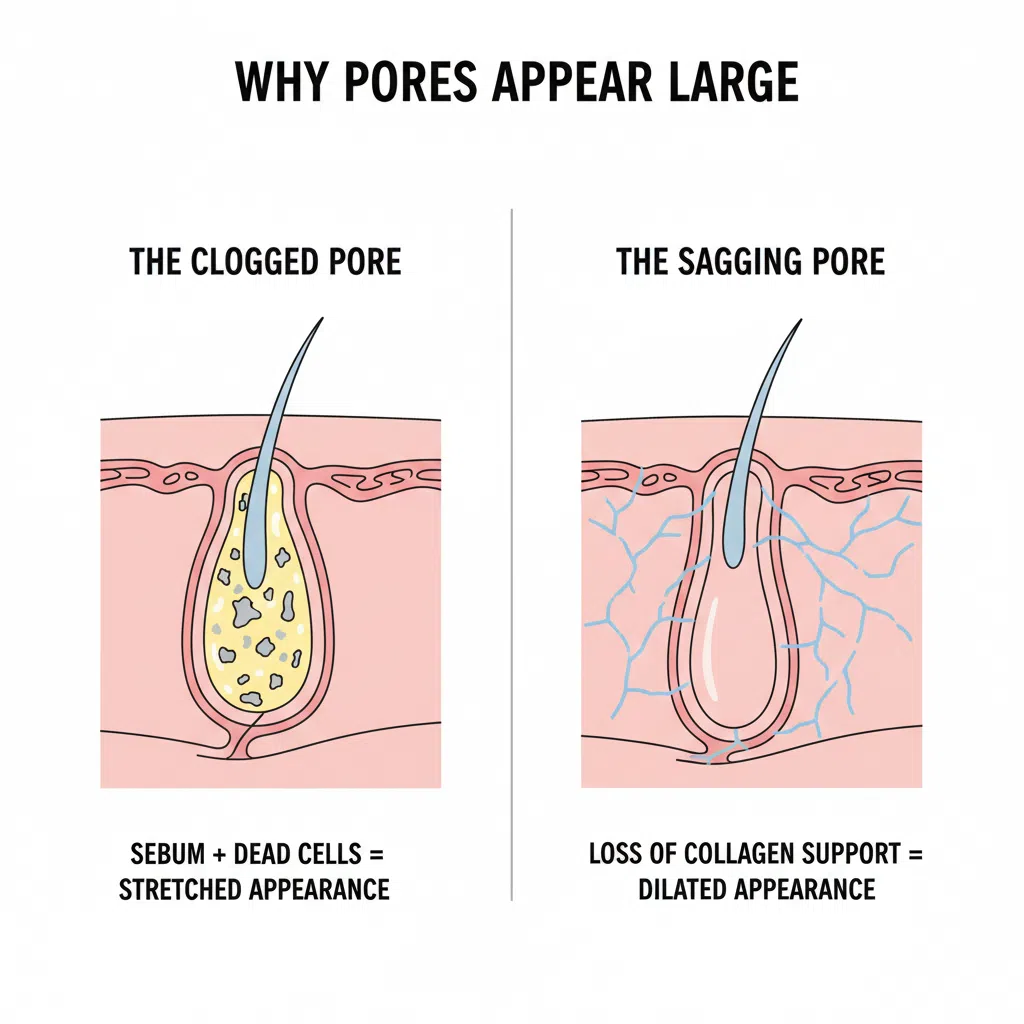
The critical concept here is appearance versus reality. While the pipe’s diameter is fixed, what happens inside and around it changes everything. A clean, empty pipe is barely noticeable. A pipe clogged with debris or surrounded by sagging, weak walls appears large and obvious. Your pores on face follow the same principle.
The Three Main Culprits Behind Visible, Enlarged Pores
- Genetics & Skin Type: This is your baseline. If your parents have visible pores, you likely will too. Those with naturally oilier skin (sebaceous glands are more active) often have genetically larger pore structures to accommodate the flow of sebum.
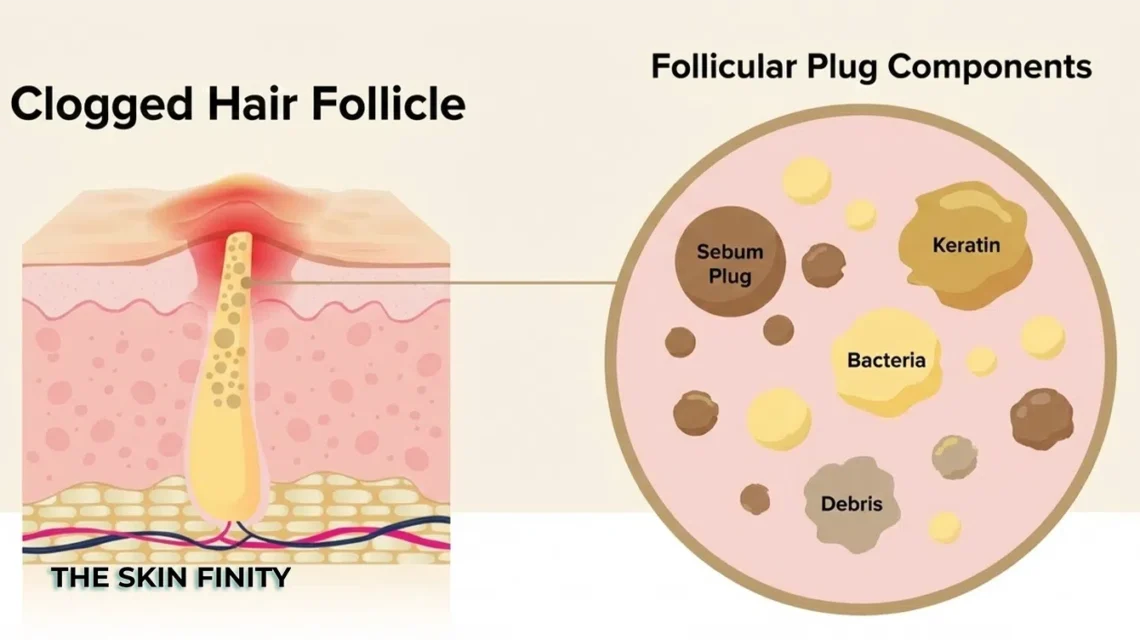
- Sebum Production & Clogging (The “Drainpipe” Effect): When your sebaceous glands are overproductive, the oil mixes with dead skin cells. This mixture can form a soft plug that fills the pore. As it oxidizes at the surface, it becomes a blackhead. This plug physically stretches the pore opening, making it appear larger. The more clogged the pore, the more visible pores become.
- Loss of Skin Elasticity & Collagen (The “Sagging” Effect): As we age, our skin’s supportive scaffolding—made of collagen and elastin fibers—naturally degrades. Sun damage (photoaging) dramatically accelerates this process. As the collagen ring around each pore weakens, the pore loses its structural support and begins to sag and dilate, appearing larger. This is a primary reason why pore size seems to increase with age.
A 2025 study in the Journal of Cosmetic Dermatology reinforced that the density of collagen around pores is directly linked to their perceived size. This is why collagen support is non-negotiable in any long-term large pores treatment plan.
Busting the Biggest Pore Myths of 2026 (And Beyond)
Let’s clear the air. Misinformation leads to ineffective routines and frustration.
- Myth #1: Pores Open and Close Like Tiny Doors. This is the most persistent myth. Pores are not muscles; they have no opening or closing mechanism. The temporary sensation of “opening” with steam is simply skin hydration and mild swelling. The feeling of “closing” with cold water or astringents is temporary tightening of the skin around the pore. A better approach is to focus on decongesting and refining.
- Myth #2: You Can Permanently Shrink Pores with Topical Products. No cream, serum, or device can alter your DNA or permanently change the physical size of your pore’s follicle opening. Anyone promising permanent pore shrinkage is misleading you. The achievable, powerful goal is minimizing their appearance through consistent care.
- Myth #3: Pore Strips Are a Long-Term Solution. While satisfying, strips offer a superficial fix. They remove the top of a blackhead (like pulling a weed but leaving the root) and do nothing to regulate oil production or improve collagen. Frequent use can irritate and potentially damage the delicate skin around the pore.
- Myth #4: Only Oily Skin Has to Worry About Pores. Dry, dehydrated, and mature skin can have very prominent pores. For dry skin, a lack of hydration can make pores more noticeable as the skin slightly contracts around them. For aging skin, collagen loss is the primary driver of enlarged pores.

Why Are My Pores So Big? Identifying Your Pore Enlargement Triggers
Understanding your personal triggers is half the battle. Here’s a breakdown of the primary and secondary causes.
Primary Causes (The Big Levers)
- Genetics & Hormones: Your blueprint. Hormonal fluctuations (puberty, menstrual cycles, stress) can send sebum production into overdrive, exacerbating the appearance of pores on nose and the T-zone.
- Chronological Aging & Sun Damage: Time and UV exposure are the arch-nemeses of collagen. Unprotected sun exposure is the single most preventable cause of age-related pore enlargement.
- Excessive Sebum Production: Overactive sebaceous glands keep pores filled and stretched, leading to a persistent look of large pores.
Secondary Causes & Aggravators
- Improper Skincare: Using comedogenic (pore-clogging) products, failing to remove makeup and sunscreen thoroughly, and—crucially—over-exfoliating with harsh scrubs or acids can compromise your skin barrier. A damaged barrier leads to inflammation, dehydration, and often, rebound oiliness.
- Lifestyle Factors: A diet high in sugars and dairy (for some individuals) may influence inflammation and oil production. Smoking breaks down collagen. Chronic stress elevates cortisol, which can increase oiliness.
- The 2026 Skinimalism Shift: The trend towards simpler, gentler routines is a direct response to the over-complicated, aggressive regimens of the past that often stripped the skin and made pore-related issues worse.
The 2026 Pore Minimization Strategy: Gentle, Smart & Sustainable
This is where science meets strategy. The modern approach prioritizes skin health for lasting visual results.
The Modern Pillars of Pore Care: Cleanse, Exfoliate, Treat, Protect

Pillar 1: Gentle, Consistent Cleansing (The Foundation)
Aggressive, stripping cleansers signal your skin to produce more oil. The goal is effective yet respectful cleansing.
- Method: Consider the double cleanse. Step one: an oil-based balm or micellar water to dissolve sunscreen, makeup, and excess sebum. Step two: a gentle, water-based foaming or cream cleanser. This ensures a deep clean without compromise.
- Frequency: Twice daily, no exceptions.
Pillar 2: Chemical Exfoliation Over Physical Scrubs
This is critical for how to minimize pores. Chemical exfoliants (acids) dissolve the bonds between dead skin cells and clear out pore-clogging debris far more effectively and evenly than gritty scrubs.
- AHAs (like Glycolic or Lactic Acid): Work on the skin’s surface to improve texture and fade dark spots that can accentuate pores.
- BHAs (Salicylic Acid for Pores): The gold standard for pore care. Its oil-soluble nature allows it to penetrate into the pore lining, dissolving sebum and dead skin cell plugs. It’s anti-inflammatory and perfect for pores on nose and oily zones.
- 2026 Gentle Approach: Start with once or twice weekly application, moving to 2-3 times as tolerated. The mantra is low frequency, high consistency.
Pillar 3: Targeted Actives (The Power Players)
- Niacinamide Dominance (The 2026 MVP): If you add one active for pore minimizing products, make it niacinamide (Vitamin B3). At concentrations of 5-10%, it’s a multi-tasker: it helps regulate sebum production, strengthens the skin barrier, reduces inflammation, and has been clinically shown to improve skin elasticity. A 2024 meta-analysis confirmed its significant role in reducing the appearance of enlarged pores. This makes niacinamide for pores a non-negotiable.
- Retinoids (The Long-Game Champion): Retinol for large pores is transformative. It accelerates cellular turnover, preventing dead cells from clogging pores. Most importantly, it stimulates collagen production, gradually strengthening the pore’s supportive structure. This is a months-long commitment with profound results. Start with a low concentration (0.25%-0.3%) and apply 2-3 nights per week.
- Supporting Actives: Vitamin C serums (in the AM) offer antioxidant protection to guard collagen from free radical damage. Peptides support the skin’s structural proteins.
Pillar 4: Hydration & Barrier Support
Dehydrated skin can overproduce oil. A robust skin barrier prevents trans-epidermal water loss and inflammation. Look for moisturizers with hyaluronic acid, ceramides, and glycerin. A hydrated plump skin makes pores less noticeable.
Pillar 5: Daily, Broad-Spectrum Sun Protection (Non-Negotiable)
Sunscreen is the ultimate pore minimizer. It prevents UV-induced collagen breakdown, protecting the structural integrity around your pores. Use SPF 30 or higher every single day, rain or shine.
A Sample 2026 Skinimalist Routine for Pore Minimization
- AM Routine:
- Gentle Water-Based Cleanser or splash with water.
- Antioxidant Serum (e.g., Vitamin C).
- Niacinamide Serum (5-10%).
- Lightweight, non-comedogenic Moisturizer.
- Sunscreen SPF 30+ (The most important step for long-term reduction).
- PM Routine:
- First Cleanse: Oil-based cleanser or balm.
- Second Cleanse: Gentle foaming or cream cleanser.
- Exfoliant (2-3x per week, e.g., Salicylic Acid 2%): Apply on dry skin, wait 20 minutes.
- Treatment (On non-exfoliant nights): Retinol serum (start slowly).
- Restorative Moisturizer: With ceramides/peptides.
Pore Care by Skin Type & Area
- Oily/Combination Skin: Focus on BHA (salicylic acid for pores) and lightweight, oil-free gels. Niacinamide is your best friend.
- Dry/Aging Skin: Prioritize AHAs for surface texture, retinoids for collagen, and rich barrier-repair moisturizers. Hydration is key to minimize pores naturally in terms of appearance.
- Targeted Care for Pores on Nose: Use a BHA toner or a gentle clay mask (1x/week) specifically on the T-zone for focused decongestion.
2026 Innovations to Watch
- Microbiome-Friendly Formulations: Prebiotic and postbiotic ingredients that balance the skin’s ecosystem, potentially calming inflammation-linked oiliness.
- AI-Personalized Product Recommendations: Apps that analyze your pore condition and skin type to recommend bespoke ingredient combinations.
- Sustainable Actives: Squalane derived from sugar, upcycled botanical extracts, and waterless formulas align efficacy with environmental consciousness.
What NOT to Do: Ineffective & Harmful Pore “Solutions”
- Pore Strips & Suction Tools: Temporary satisfaction with potential for broken capillaries and irritation.
- Over-Exfoliation: Using strong acids or scrubs daily destroys your moisture barrier, leading to worse problems.
- “Miracle” Instant Fixes: Be highly skeptical of any product or gadget promising permanent pore shrinkage overnight.
- Squeezing and Picking: Causes trauma, can spread bacteria, and may permanently damage the pore structure.
Frequently Asked Questions About Pores and Minimization
1. Can you shrink pores permanently?
No. Pore size is genetically predetermined. However, you can significantly and consistently minimize their appearance through the strategies outlined above.
2. How to minimize pores on the face?
Follow the five-pillar strategy: 1) Gentle double cleansing, 2) Regular BHA exfoliation, 3) Treating with niacinamide and retinol, 4) Maintaining hydration, 5) Daily SPF use.
3. Do pores open and close?
No. This is a pervasive myth. Pores are not muscular. Temperature changes cause temporary tightening or swelling of the surrounding skin, but the pore itself does not actively open or close.
4. What causes large pores?
The primary causes are genetics, overactive sebum (oil) production, and the natural loss of collagen and skin elasticity due to aging and sun damage.
5. How to make pores smaller naturally?
“Naturally” in skincare often refers to gentle, consistent practices: using non-stripping cleansers, incorporating clay masks once a week, applying topical green tea (an antioxidant), and being militant about sun protection. Remember, results are about minimizing appearance.
6. Is niacinamide good for pores?
Yes, it is one of the best multi-purpose ingredients for pore minimization. It helps control oil, reduces redness, improves skin elasticity, and strengthens the barrier, all of which contribute to less visible pores.
7. What’s the best treatment for large pores on nose?
The pores on nose are often oilier. A targeted approach with a salicylic acid for pores product (a toner or serum) applied specifically to the nose area 3-4 times a week, combined with consistent double cleansing, is highly effective.
8. Does retinol help with enlarged pores?
Absolutely. Retinol for large pores works by increasing cell turnover (keeping them clear) and, most importantly, stimulating collagen production over time, which tightens and strengthens the pore’s supportive structure.
9. Why are my pores so big all of a sudden?
Sudden changes can be due to hormonal fluctuations (stress, cycle), a new product that is clogging your pores, seasonal changes increasing oil production, or a compromised skin barrier from over-exfoliation.
10. Are pore minimizing products worth it?
They are worth it if they contain proven, effective actives like niacinamide, salicylic acid, retinoids, or AHAs. Avoid products that rely on astringents like high alcohol content for a temporary “tight” feeling.
11. How to reduce pore size with salicylic acid?
Incorporate a leave-on BHA (salicylic acid) product at 2% concentration into your routine 2-3 times per week. Apply to clean, dry skin, let it absorb for 20 minutes, then follow with the rest of your routine. It dissolves pore-clogging debris from within.
12. Can makeup make pores look smaller?
Yes, makeup can create an optical illusion. Primers with silica or dimethicone can temporarily “blur” the appearance of pores. However, it is critical to thoroughly remove all makeup every night to prevent actual clogging.
13. How long does it take to see results from pore minimization?
For superficial improvement from decongestion (via cleansers and BHA), you may see a difference in 4-8 weeks. For structural improvement from collagen-building ingredients like retinol, expect a commitment of 3 to 6 months of consistent use to see visible refinement.
The Realistic Path to Refined, Healthy-Looking Skin
The journey to less visible pores is not about fighting your skin, but about nurturing it. The quest to permanently shrink pores is a dead end, but the path to minimizing their appearance is clear, science-backed, and deeply effective.
Embrace the 2026 philosophy of skinimalism: fewer products, smarter ingredients, and unwavering consistency. Your arsenal is powerful—niacinamide for regulation and resilience, salicylic acid for deep decongestion, and retinol for long-term structural support, all guarded by the holy grail of skincare, daily SPF.
Start by auditing your routine. Introduce one proven active at a time. Listen to your skin. Most importantly, release the frustration and see your pores for what they are: essential, functional parts of you that can look their best when cared for with knowledge and patience. The goal isn’t impossible perfection; it’s healthy, clear, radiant skin where pores are simply a footnote, not the headline.
Your Call to Action: This week, commit to one change. Maybe it’s adding a niacinamide serum to your AM routine, or finally making SPF a non-negotiable daily habit. That single, consistent step is the beginning of real, visible transformation.

 Skincare Myths Debunked: Evidence-Based Facts & Future Trends for 2026
  The Invisible Architects: How Your Hormones Dictate Your Skin’s Health, Glow, and Age
  The Ultimate Skincare Routine for Night Shift Workers: Adapting Your Regimen to Irregular Sleep
  Herbal Extracts in Skincare: Aloe Vera, Green Tea, and Chamomile
  Fading Sun Damage: Your Expert Guide to Reversing Spots and Uneven Tone
  Understanding Skin Texture: Smooth vs. Rough and How to Improve It