 The Skin Finity
 Imagine your skin as a majestic, ancient fortress. The strong, outer wall—your skin barrier—defends the vibrant city within from invaders like pollution and microbes, and keeps essential resources like water from escaping. When this wall is strong, your skin is resilient, calm, and radiant. But when it’s compromised, the results are all too familiar: dryness, sensitivity, and a feeling that everything irritates you.
In the world of 2026 skincare, understanding and nurturing your skin barrier function has moved from a niche concern to the absolute cornerstone of an effective routine. With trends shifting towards microbiome support and gentle, intelligent actives, the era of aggressive over-exfoliation is fading. This comprehensive guide will demystify your body’s master shield, teach you to spot the signs of a damaged skin barrier, and provide a science-backed, step-by-step plan on how to repair and protect it for lifelong skin health.
Part 1: The Skin Barrier Demystified – Your Body’s Master Shield
What Is The Skin Barrier? More Than Just “Skin”
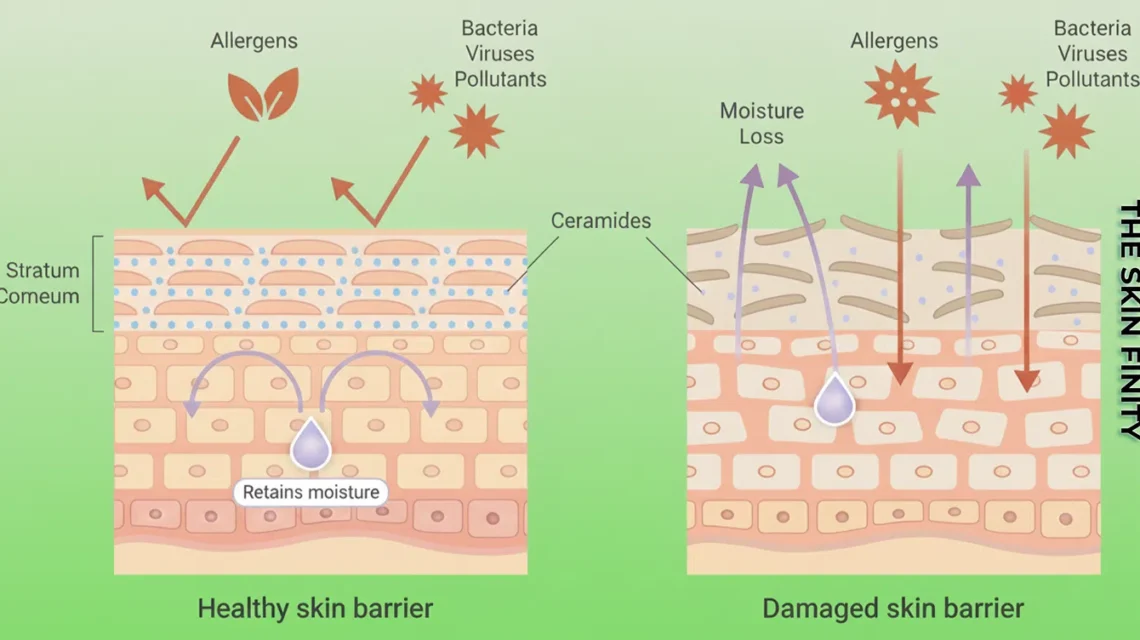
Your skin barrier, scientifically known as the stratum corneum, is the very outermost layer of your skin. Think of it as a sophisticated “brick and mortar” system. The “bricks” are skin cells called corneocytes, which are filled with tough, protective keratin. The “mortar” is a rich, fatty lipid matrix composed of ceramides, cholesterol, and free fatty acids. This structure is your first line of defense.
But there’s more to the story. Living harmoniously on this wall is your skin microbiome—a diverse ecosystem of trillions of beneficial bacteria. In 2026, we understand these microbes are not passive residents; they are active peacekeepers that train your immune system, fight off pathogens, and help maintain the barrier’s integrity. Together, the cells, lipids, and microbes create a slightly acidic environment (the “acid mantle”) that further deters harmful invaders. This entire complex system is what we mean when we talk about a healthy skin barrier.
The Lifesaving Functions of a Healthy Skin Barrier
Why is this barrier so critical? Its functions are non-negotiable for overall health and beauty:
- The Ultimate Moisture Lock: A strong barrier is your best moisturizer. It prevents Transepidermal Water Loss (TEWL), sealing hydration within your skin to keep it plump, smooth, and resilient.
- Your Protection Squad: It acts as a physical and biochemical shield against environmental aggressors like pollution particles, UV-induced free radicals, wind, cold, and harmful microorganisms.
- Sensory & Immune Gatekeeper: It selectively allows beneficial substances in while blocking out irritants and allergens. A compromised skin barrier lets irritants penetrate easily, triggering inflammation, sensitivity, and conditions like eczema.
Part 2: How the Barrier Breaks: Common Causes of a Compromised Skin Barrier
External Aggressors and Environmental Foes
Your barrier battles the elements daily. Harsh weather—bitter cold, dry wind, and low humidity—can strip lipids. Ultraviolet (UV) radiation breaks down collagen and ceramides. Modern life exposes us to pollution and particulate matter (PM2.5) that generate free radicals, degrading barrier lipids. Even long, hot showers and chlorinated pool water can contribute to an impaired skin barrier.
The #1 Self-Inflicted Foe: Over-Exfoliation and Harsh Routines
The most common cause of barrier damage in recent years is the “more is more” skincare approach. Over exfoliated skin barrier damage occurs when we use too many active ingredients (like AHAs, BHAs, and retinoids) too frequently, or combine them without understanding their cumulative impact. Physical scrubbing with harsh tools or grainy scrubs can cause micro-tears. This relentless assault doesn’t give the skin time to rebuild its protective wall, leading directly to skin barrier damage.
2026 Warning: We’re seeing a backlash against trends like daily at-home acid toning and the misuse of high-potency retinoids without proper buffering and barrier support.
Internal Undermining: Health & Lifestyle Factors
The state of your inner health is reflected in your barrier. Chronic stress elevates cortisol, which can impair barrier recovery. Poor sleep reduces skin’s overnight repair processes. Diets chronically low in essential fatty acids (like Omega-3s), antioxidants, and vitamins compromise the building blocks your skin needs. Underlying conditions like eczema, rosacea, and psoriasis are intrinsically linked to a genetically vulnerable barrier.
Part 3: Red Flag Alert: Recognizing the Signs of a Damaged Skin Barrier
Top Symptoms of Skin Barrier Damage
How do you know if your fortress wall is breached? Look for these key signs of damaged skin barrier:
- Persistent Dryness & Flakiness: No matter how much you moisturize, your skin feels tight, looks dull, and may flake.
- Increased Sensitivity & Stinging: Products you’ve used for years suddenly burn or sting upon application.
- Redness & Inflammation: Persistent, low-level redness or visible irritation, especially in patches.
- Itchiness: A constant, nagging itch without a visible rash.
- Rough, Uneven Texture: Skin feels sandpapery and lacks smoothness.
- Sudden Breakouts or Clogged Pores: A breached barrier can allow bacteria deeper access and disrupt healthy functioning, leading to acne.
- A Feeling of Tightness: Particularly noticeable after cleansing.
- Increased Reactivity: Your skin reacts negatively to environmental changes, new products, or even water.
Self-Check Quiz: Do you experience two or more of these symptoms regularly? You might be dealing with a compromised skin barrier.
Differentiating Barrier Damage from Other Conditions
It’s important to distinguish barrier damage from an allergic reaction (which is more sudden, intensely itchy, and localized) or simple dryness (which is often resolved by a richer moisturizer). The hallmark of true skin barrier damage symptoms is a pervasive increase in sensitivity to everything.
Part 4: The 2026 Repair Manual: How to Heal Your Skin Barrier Step-by-Step
The “Barrier First” Mindset: The Golden Rules for Repair
Healing begins with a mindset shift. Follow these non-negotiable rules:
- Simplify Aggressively: Strip your routine down to a gentle cleanser, a reparative moisturizer, and a mineral sunscreen. That’s it.
- Pause All Actives: Temporarily stop using retinoids, AHAs/BHAs, vitamin C, and physical scrubs. Let repair be the sole focus.
- Hydrate & Occlude: Your new mantra. Pull moisture in with humectants and seal it in with emollients and occlusives.
- Practice Extreme Gentleness: Use lukewarm water, pat skin dry (don’t rub), and avoid rough washcloths or cleansing brushes.
Your Core 3-Step Repair Routine
This simple, consistent routine is your pathway to how to heal skin barrier function.
Step 1: Cleanse with Supreme Gentleness.
Use a lukewarm water rinse in the AM, or a fragrance-free, lipid-replenishing cream or balm cleanser in the PM. Avoid anything that foams excessively or leaves skin feeling “squeaky clean,” as this strips lipids.
Step 2: Replenish & Hydrate with “The Holy Trinity.”
This is the core of repair. Apply products that combine:
- Humectants (e.g., Hyaluronic Acid, Glycerin) to draw water into the skin.
- Emollients (e.g., Squalane, Jojoba Oil) to smooth and soften.
- Occlusives & Barrier Lipids (e.g., Ceramides, Cholesterol, Fatty Acids, Petrolatum) to seal in moisture and directly repair the “mortar.” Look for products labeled with “ceramide NP,” “cholesterol,” and “fatty acids” to mimic skin’s natural composition.
Step 3: Protect Relentlessly with Sunscreen.
UV radiation is a major barrier breaker. Every morning, apply a broad-spectrum sunscreen, preferably one with a mineral (zinc oxide/titanium dioxide) base, as these are often less irritating on a damaged skin barrier.
Realistic Timelines: How Long Does Skin Barrier Repair Take?
Patience is essential. While you may feel initial relief (less stinging, eased tightness) within 2-3 days, significant repair takes 2 to 4 weeks of consistent, gentle care. For a severely impaired skin barrier, full recovery can take 6 weeks or more. Your skin’s natural 28-day turnover cycle is your guide—consistency through at least one full cycle is key.
Part 5: Barrier-Friendly Armory: Key Ingredients and 2026 Product Trends
The Evidence-Based Ingredient Hall of Fame
When selecting products for skin barrier repair, these are the best ingredients to look for:
- Ceramides (NP, AP, EOP): The undisputed stars of barrier repair. They make up over 50% of your skin’s lipid matrix. Look for products that list specific ceramides or “ceramide complex.”
- Niacinamide (Vitamin B3): A powerhouse multitasker. At 5% concentration, it boosts your skin’s own ceramide production, reduces inflammation, and improves resilience.
- Hyaluronic Acid & Glycerin: Super-humectants that act like moisture magnets, plumping the skin and creating an optimal environment for healing.
- Panthenol (Provitamin B5): Deeply soothing, hydrating, and promotes skin healing. A hero for sensitive, over-exfoliated skin.
- Peptides: These amino acid chains signal your skin to produce more collagen and support structures, strengthening the foundation beneath the barrier.
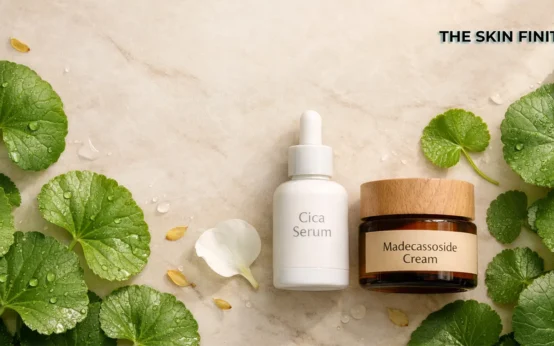
- Centella Asiatica (Cica) & Madecassoside: Potent anti-inflammatory and calming botanicals that soothe redness and support wound healing—perfect for a reactive barrier.
The Future is Now: 2026 Trends in Barrier Support
- Postbiotics & Prebiotics: The microbiome focus has evolved. While probiotics are live bacteria, postbiotics (the beneficial byproducts they produce) and prebiotics (the food for good bacteria) are now formulated into skincare to directly calm the skin and strengthen skin barrier function more stably.
- Gentle, Next-Gen Actives: Innovation is delivering efficacy without aggression. Look for retinyl esters (gentler retinoids) and time-released or encapsulated acids that minimize irritation while providing benefits.
- AI-Personalized Skincare: Apps and devices can now analyze your skin’s hydration, redness, and texture to recommend personalized routines and identify early signs of barrier damage, taking the guesswork out of protection.
Part 6: Beyond Products: Lifestyle and Long-Term Protection Strategies
Diet, Stress, and Sleep: The Internal Pillars
A healthy skin barrier is built from the inside out. Nourish it with:
- Foods rich in Omega-3s: Fatty fish, walnuts, flaxseeds (build lipid layers).
- Antioxidant-rich fruits & vegetables: Berries, leafy greens (fight free radicals).
- Adequate protein and vitamins: Essential for cellular repair.
Manage stress through mindfulness, yoga, or walking—high cortisol directly weakens barrier function. Prioritize 7-9 hours of quality sleep; this is when your skin undergoes its most intensive repair.
Tailoring Protection: Routines for Different Skin Types
- Dry Skin: Focus on richer textures with higher concentrations of occlusives (like shea butter) and ceramides. Layering a facial oil under your moisturizer can be beneficial.
- Oily/Acne-Prone Skin: Barrier care is not optional. Choose lightweight, non-comedogenic gel-creams or serums with niacinamide, ceramides, and squalane. Avoid the trap of over-drying your skin.
- Sensitive Skin: Stick to fragrance-free, essential-oil-free, and minimal-ingredient formulas. Always patch test. Ingredients like centella asiatica and oat extract are your best friends.
Myths vs. Facts: Separating Barrier Truth from Fiction
- Myth: “Oily skin has a strong barrier, so it doesn’t need this focus.”
Fact: Oil production (sebum) and barrier integrity are separate. Oily skin can easily have a damaged skin barrier. - Myth: “You should feel a tingle or burn for a product to be working.”
Fact: Stinging is a sign of irritation and impaired skin barrier, not efficacy. Effective repair should feel soothing. - Myth: “Natural/DIY remedies (like lemon juice, baking soda) are best for repair.”
Fact: These often disrupt the skin’s pH and can cause significant damage. Science-backed ingredients are safer and more effective.
Part 7: FAQs: Your Top Skin Barrier Questions, Answered
Frequently Asked Questions About Skin Barrier Health and Repair
1. What is the skin barrier and its primary function?
It’s the outermost layer of your skin (stratum corneum), acting as a shield to retain moisture and protect against external aggressors and pathogens.
2. What are the most common signs of a damaged skin barrier?
Persistent dryness, sensitivity/stinging with products, redness, itchiness, tightness, rough texture, and sudden breakouts.
3. How long does it take to repair a damaged skin barrier?
With dedicated care, initial improvement in 2-3 days, significant repair in 2-4 weeks, and full recovery for severe damage in 6+ weeks.
4. What are the absolute best ingredients for skin barrier repair?
Ceramides, niacinamide, hyaluronic acid, panthenol, cholesterol, and fatty acids (like linoleic acid).
5. Can over-exfoliation really damage my barrier? How do I fix it?
Yes, it’s a top cause. To fix over-exfoliated skin barrier, stop all exfoliation, switch to a gentle cleanser/moisturizer/sunscreen routine, and use barrier-repair ingredients like ceramides until skin recovers.
6. I have oily/acne-prone skin. Do I still need to focus on my barrier?
Absolutely. A compromised barrier can worsen acne by increasing inflammation. Use non-comedogenic, oil-free barrier-repair products.
7. How can I protect my skin barrier in my daily routine?
Use a gentle cleanser, apply a moisturizer with barrier-supporting ingredients every day, and never skip broad-spectrum sunscreen.
8. Are ceramides the most important ingredient for repair?
They are among the most critical, as they are the primary structural lipids of the barrier. For best results, use them combined with cholesterol and fatty acids.
9. Can I heal my skin barrier naturally?
Supporting repair with a healthy diet and stress management helps, but topical application of key lipids (ceramides) and moisturizers is necessary for direct skin barrier repair.
10. What does a healthy skin barrier look and feel like?
It feels comfortable, smooth, and hydrated—not tight or oily. It looks plump, even-toned, and calm, with minimal reactivity to products or environment.
11. When can I reintroduce actives after repair?
After 4-6 weeks of consistent comfort, reintroduce one active at a low concentration and frequency (e.g., retinol once a week). Monitor for sensitivity.
12. How does the skin microbiome relate to the barrier?
A diverse microbiome supports barrier function by fighting pathogens, reducing inflammation, and aiding in lipid production.
13. What’s one simple change I can make today to help my barrier?
Swap a foaming cleanser for a gentle, hydrating cream cleanser tonight.
Conclusion: Your Journey to a Resilient, Healthy Skin Barrier
Understanding your skin barrier is the first step toward transformative, lasting skin health. By learning what it is, recognizing the signs of damage, and adopting a protective and reparative routine, you are investing in your skin’s long-term resilience and radiance. This isn’t a quick fix but a foundational philosophy: when your barrier is strong, everything else—from anti-aging to acne control—becomes more effective and less stressful.
As we move through 2026, the future of skincare is intelligent, gentle, and barrier-centric. With advances in microbiome science and personalized care, maintaining a healthy skin barrier is becoming more intuitive. Start tonight. Audit your routine, embrace simplicity and nourishment, and give your skin the compassionate care it deserves. Your future, resilient complexion will thank you.
Ready to start your repair journey? Share your biggest barrier struggle or success in the comments below! For more science-backed guides to smart skincare, subscribe to our newsletter.

 Centella Asiatica: The Healing and Soothing Power for Sensitive Skin – The Skin Finity
  The Invisible Architects: How Your Hormones Dictate Your Skin’s Health, Glow, and Age
  The Ultimate Skincare Routine for Night Shift Workers: Adapting Your Regimen to Irregular Sleep
  Herbal Extracts in Skincare: Aloe Vera, Green Tea, and Chamomile
  Fading Sun Damage: Your Expert Guide to Reversing Spots and Uneven Tone
  Understanding Skin Texture: Smooth vs. Rough and How to Improve It