
 The Skin Finity
 You’ve seen it everywhere: on TikTok hauls, Instagram shelfies, and YouTube tutorials. Flawless, dewy “glass skin” that seems to glow from within. The secret, everyone claims, is the legendary 10 step Korean skin care routine. But as a beginner, staring at a lineup of ten mysterious bottles and jars, you’re hit with a wave of doubt. Is this intricate ritual the holy grail for radiant skin, or is it just overwhelming—and potentially excessive—overkill?
The truth lies somewhere in the middle. The Korean beauty routine isn’t a rigid commandment but a philosophy of layered, preventative care. This guide will demystify the hype, break down each step with clarity, and give you the honest tools to decide: is the Korean 10 step skincare routine worth it for you, or should you start with something simpler? Let’s navigate the world of K-beauty together, separating transformative practice from unnecessary complexity.
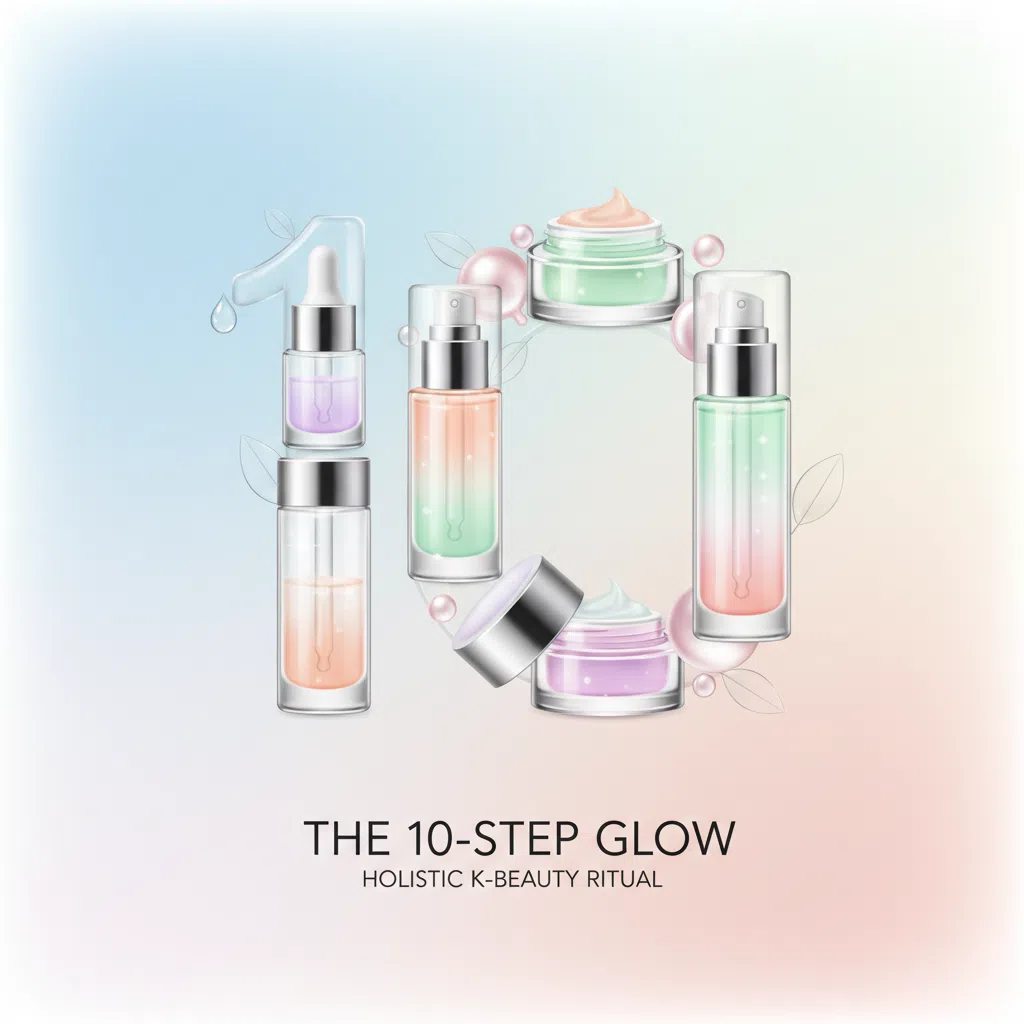
Decoding the Hype: What Is the 10-Step Korean Beauty Routine?
The Philosophy Behind the Steps: More Than Just a Number
At its core, the 10 step Korean skincare routine is not about blindly following a number. It’s a systematic approach rooted in a simple philosophy: consistent, gentle care and intense hydration lead to healthy, resilient skin. Think of it less as a strict rulebook and more as a comprehensive menu of options for your skin’s needs.
The foundational principles are double cleansing to ensure a perfectly clean canvas, layering multiple, lightweight hydrating products to build moisture deep within the skin, and using targeted treatment serums to address specific concerns. This methodical layering is designed to maximize absorption and efficacy, akin to watering a plant deeply and consistently rather than flooding it once a week.

The Evolution: From 10-Step Rigidity to Flexible “Skin Cycling”
It’s crucial to understand that the “10-step” concept, while brilliantly effective at marketing K-beauty to the world, has evolved. In South Korea itself, most enthusiasts don’t perform ten distinct steps twice a day. Instead, they adhere to the framework and customize based on their skin’s condition that day—a practice now popularly known in the West as “skin cycling.”
The modern, intelligent approach to the Korean skincare routine order is about understanding product categories and selecting what your skin needs. Some days might be a simple 5-step routine; others, when you need extra care or masking, might reach 10. This flexibility is the key to sustainable, effective skincare.
Part 2: The Full 10-Step Korean Skincare Routine, Demystified
Let’s break down the classic 10 steps in Korean skincare routine, explaining the “why” and “how” behind each one. Remember, this is the full blueprint—you are not meant to start here all at once.
Steps 1 & 2: The Double Cleanse (The Non-Negotiable Foundation)
This is the cornerstone of K-beauty and arguably the most important takeaway for beginners.
- Step 1: Oil Cleanser
- Purpose: To dissolve oil-based impurities: sunscreen (especially mineral-based), makeup, sebum, and pollution that a water-based cleanser can’t touch.
- Key Benefit: Prevents clogged pores and ensures truly clean skin without stripping it.
- Hero Ingredients: Grapeseed oil, jojoba oil, sunflower seed oil. Look for lightweight, emulsifying formulas that rinse clean.
- How-to: Apply to dry face with dry hands. Massage gently for 60 seconds, then add water to emulsify into a milky texture before rinsing thoroughly.
- Step 2: Water-Based Cleanser
- Purpose: To cleanse away sweat, dirt, and any residue from the oil cleanser.
- Key Benefit: Provides a fresh, clean base without compromising the skin’s moisture barrier. Korean cleansers are typically low-pH to maintain skin’s natural acidity.
- Hero Ingredients: Hyaluronic acid for hydration, green tea or centella asiatica for calming, mild surfactants.
- How-to: Use a small amount, lather in hands, and cleanse damp skin for 60 seconds. Rinse with lukewarm water and pat dry.
Steps 3-5: The Prep & Hydration Layer (The “Essence” of K-Beauty)
This is where the signature hydration begins.
- Step 3: Exfoliant (1-3x/Week, NOT Daily)
- Purpose: To remove dead skin cells, unclog pores, and improve texture and product absorption.
- Key Benefit: Promotes cell turnover, fades hyperpigmentation, and refines skin. CRITICAL NOTE: This is a major point where beginners fail. Over-exfoliation destroys the skin barrier.
- Hero Ingredients: Chemical exfoliants (AHAs like glycolic acid for surface, BHAs like salicylic acid for pores, PHAs for sensitive skin) are preferred over physical scrubs in K-beauty.
- How-to: Apply after cleansing on dry skin, wait 5-10 minutes, then proceed to toner.
- Step 4: Toner (or “Skin”)
- Purpose: To rebalance skin’s pH after cleansing, deliver an initial burst of hydration, and prep skin for better absorption of subsequent products.
- Key Benefit: Hydrates and softens skin instantly. Forget the astringent Western toners; K-beauty toners are often called “skin softeners” and are hydrating liquids.
- Hero Ingredients: Hyaluronic acid, glycerin, mugwort, rice water.
- How-to: Apply with clean hands, a cotton pad, or pat directly onto skin.
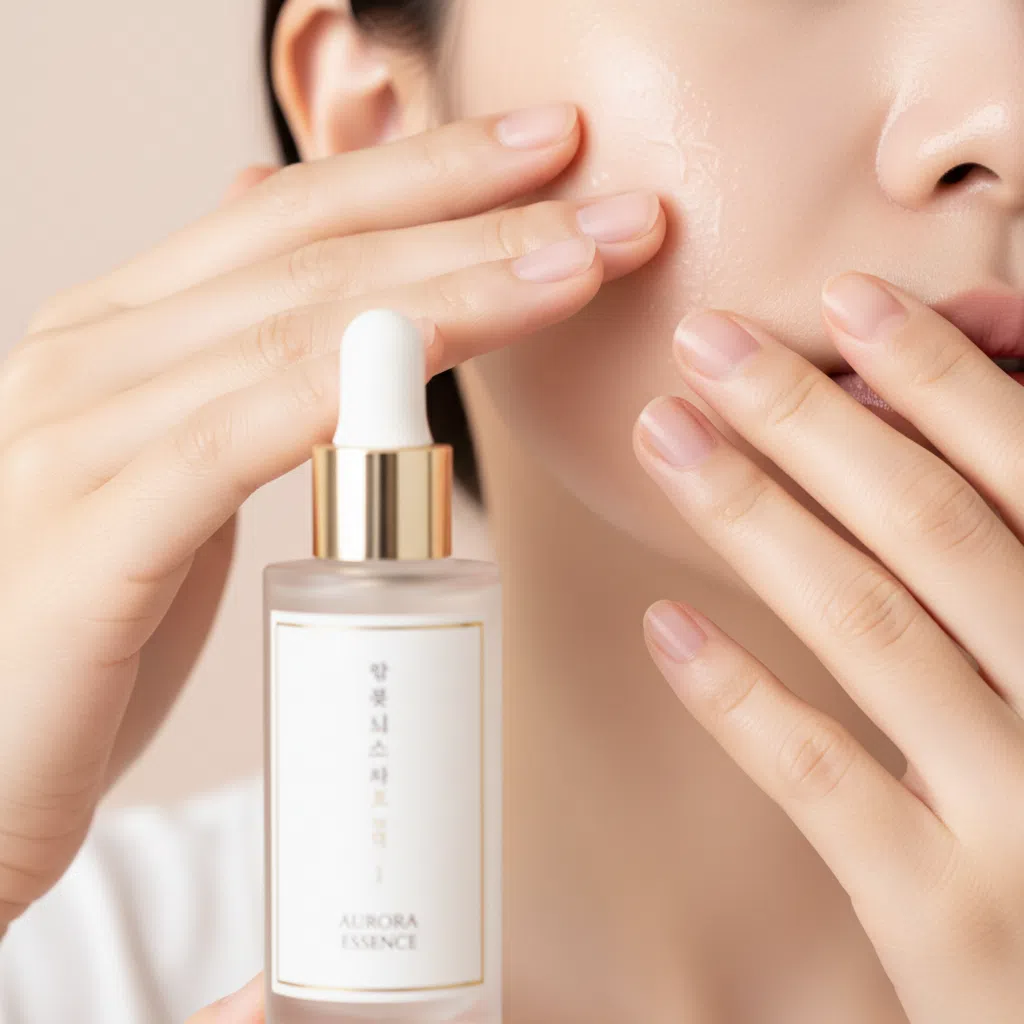
- Step 5: Essence
- Purpose: The heart of the routine. Essences are lightweight, nutrient-rich liquids that hydrate, repair, and boost skin’s overall health and resilience.
- Key Benefit: Often contains fermented ingredients that enhance skin clarity, tone, and receptiveness to serums. This is a key step for achieving that coveted Korean glass skin glow.
- Hero Ingredients: Fermented galactomyces, bifida, saccharomyces, or snail mucin filtrate.
- How-to: Pat a coin-sized amount gently into the skin with your palms.
Steps 6-8: Targeted Treatments & Intensive Moisture
Now we address specific concerns and lock in moisture.
- Step 6: Serum/Ampoule
- Purpose: Targeted treatment with a high concentration of active ingredients. This is where you customize your Korean skincare routine for beginners based on your needs.
- Key Benefit: Addresses concerns like dullness, acne spots, fine lines, or dehydration directly.
- Hero Ingredients: Vitamin C (brightening), Niacinamide (pores/oil/texture), Snail Mucin (healing/hydration), Peptides (anti-aging).
- How-to: Apply 2-3 drops to face and neck, focusing on problem areas.
- Step 7: Sheet Mask (1-3x/Week)
- Purpose: An intensive treatment session for hydration, brightening, or calming. It’s a booster, not an everyday step.
- Key Benefit: Occlusion helps drive ingredients deeper into the skin for immediate, plumping results.
- Hero Ingredients: Varies by goal—aloe for soothing, hyaluronic acid for hydration, propolis for brightening.
- How-to: Apply to clean, toned skin for 15-20 minutes. Pat in the remaining essence. No need to rinse.
- Step 8: Eye Cream
- Purpose: To hydrate and protect the delicate, thin skin around the eyes.
- Key Benefit: Can help with dryness, fine lines, and puffiness. Prevents heavier face creams from migrating into the eyes.
- Hero Ingredients: Caffeine (puffiness), peptides (lines), hyaluronic acid (hydration).
- How-to: Dab a rice-grain-sized amount per eye with your ring finger, gently patting until absorbed.
Steps 9 & 10: Sealing It In & Daytime Armor
The final, crucial acts.
- Step 9: Moisturizer or Cream
- Purpose: To create a protective barrier that seals in all the previous layers of hydration and treatment.
- Key Benefit: Prevents transepidermal water loss (TEWL), keeping skin plump and supple all day or night.
- Hero Ingredients: Ceramides, peptides, shea butter, squalane. Gels for oily skin, creams for dry skin.
- How-to: Take a dime-sized amount, warm between palms, and press gently onto the face and neck.
- Step 10: Sunscreen (AM ROUTINE ONLY)
- Purpose: The single most important anti-aging and skin-health step. Protects from UVA/UVB damage that causes wrinkles, dark spots, and cancer.
- Key Benefit: Preserves all your hard work and investment in the previous steps. No Korean glass skin routine is complete without it.
- Hero Ingredients: Modern K-beauty sunscreens often use chemical filters like Uvinul A Plus, Tinosorb S, and Mexoryl for high protection with a lightweight, non-white-cast finish.
- How-to: Apply a generous ¼ teaspoon for face and neck as the absolute last step every single morning, rain or shine.
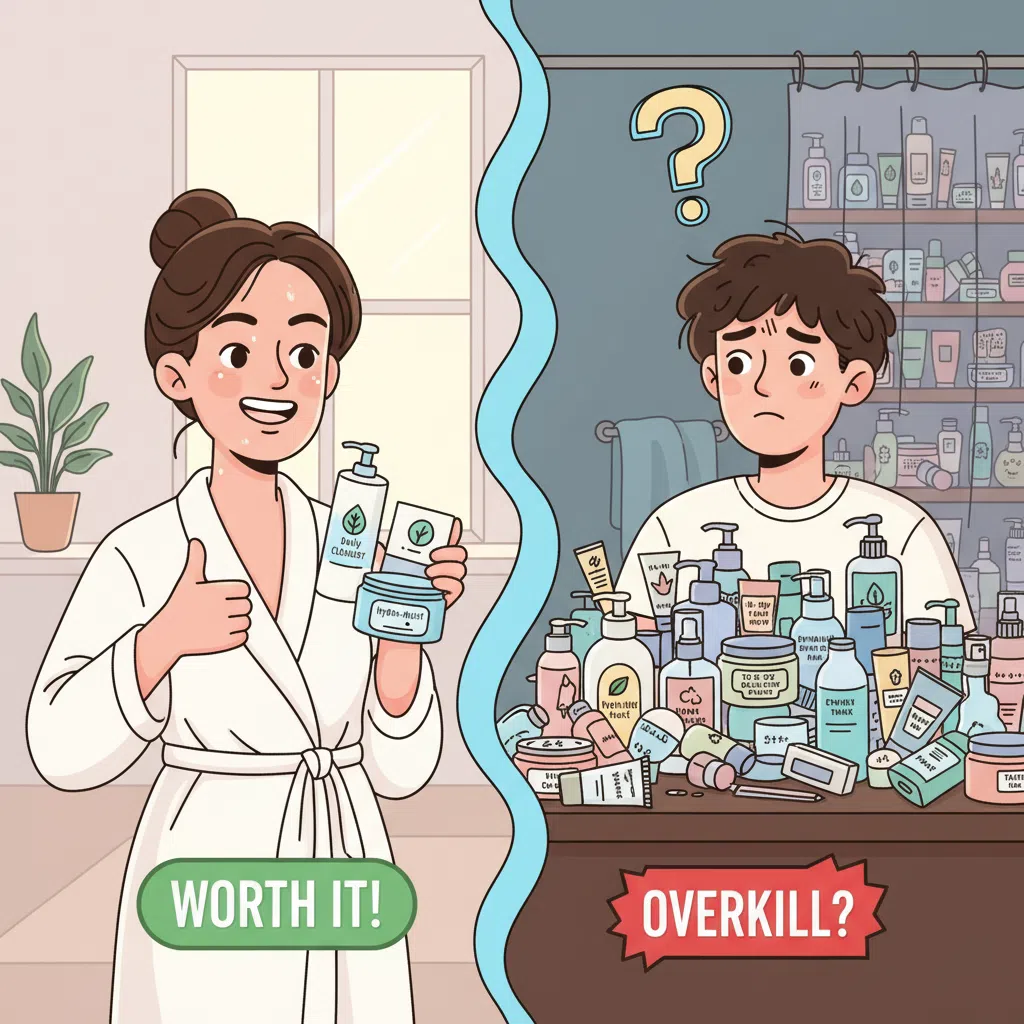
The Great Debate: Is the 10-Step Routine “Worth It” or “Overkill”?
Let’s weigh the undeniable benefits against the valid concerns, especially for a newcomer.
The “Worth It” Arguments: Why the Hype Exists
- Unmatched Hydration & The “Glass Skin” Effect: The layering of multiple humectants and emollients delivers profound, multi-level hydration that a single moisturizer often can’t achieve. This leads to that plump, dewy, translucent look—the famous glass skin.
- Ultimate Customization: The routine allows you to be a skincare mixologist. You can target multiple concerns (e.g., dryness + dark spots + pores) simultaneously with precision, something a monolithic Western routine struggles with.
- The Ritual as Self-Care: For many, the mindful, deliberate process is a form of meditation and stress relief. This psychological benefit can translate to reduced cortisol levels, potentially improving skin conditions like acne.
- Preventative Focus: Consistent, gentle care strengthens the skin barrier over time, making skin more resilient to environmental stressors and delaying signs of aging.
The “Overkill” Concerns: Valid Reasons for Pause
- Time & Commitment: A full 10-step routine can take 20-30 minutes twice daily. For many, this is simply unsustainable and can lead to skincare burnout.
- Cost & Consumerism: Acquiring 10+ quality products represents a significant financial investment. The pressure to constantly try new “holy grail” items can fuel unnecessary spending.
- Risk of Irritation & Barrier Damage (The Biggest Risk for Beginners): Introducing multiple new products with active ingredients (AHA, BHA, Vitamin C, Retinol) at once is the fastest way to a damaged moisture barrier, leading to redness, stinging, breakouts, and dehydrated skin. As dermatologists often warn, “Start low and go slow.”
- The “More is More” Fallacy: Skin health has a ceiling. Once your skin is cleansed, optimally hydrated, protected, and receiving its needed actives, extra steps may offer diminishing returns or cause conflict. More products do not inherently mean better skin.
The Beginner’s Blueprint: How to Start Smart (Without the Overwhelm)
Here’s your actionable guide to building a simplified Korean skincare routine that works.
The Golden Rule: Start Slow, Introduce Gradually
Adopt a beginner Korean skincare routine mindset. Introduce one new product every 1-2 weeks. Always patch test behind your ear or on your jawline first. This allows you to monitor for adverse reactions and pinpoint any product that doesn’t agree with you.
Your Simplified Korean Skincare Routine: 3, 5, and 7-Step Versions
Forget 10. Start here and build as you learn your skin.
- The 3-Step “Gateway” Routine (The Absolute Foundation):
- AM: Water Cleanser, Moisturizer, Sunscreen.
- PM: Oil Cleanser, Water Cleanser, Moisturizer.
- Goal: Master consistency and learn your skin’s baseline.
- The 5-Step “Core” Routine (The Sweet Spot for Most):
- AM: Water Cleanser, Toner/Essence, Serum (e.g., Vitamin C), Moisturizer, Sunscreen.
- PM: Oil Cleanser, Water Cleanser, Toner/Essence, Serum (e.g., Niacinamide or Snail Mucin), Moisturizer.
- Goal: Incorporate hydration layering and one targeted treatment.
- The 7-Step “Advanced Beginner” Routine:
- Add an Exfoliant (2x/week, PM) and a Sheet Mask (1x/week, PM) to your 5-Step Core Routine.

Budget-Friendly Korean Product Recommendations for Each Step
- Oil Cleanser: Kose Softymo Speedy Cleansing Oil
- Water Cleanser: COSRX Low pH Good Morning Gel Cleanser
- Exfoliant: COSRX BHA Blackhead Power Liquid (for pores) or Some By Mi AHA-BHA-PHA 30 Days Miracle Toner
- Toner: Laneige Cream Skin Refiner (hydrating) or Rovectin Skin Essentials Activating Treatment Lotion
- Essence: Missha Time Revolution First Treatment Essence (fermented) or COSRX Advanced Snail 96 Mucin Power Essence
- Serum: Beauty of Joseon Glow Serum (Propolis + Niacinamide) or The Ordinary Niacinamide 10% + Zinc 1% (affordable, not K-beauty but effective)
- Sheet Mask: Mediheal or Dr. Jart+ sheet masks (variety packs are great)
- Eye Cream: Beauty of Joseon Revive Eye Serum (Ginseng + Retinal)
- Moisturizer: Illiyoon Ceramide Ato Concentrate Cream or Dr. G Red Blemish Clear Soothing Cream
- Sunscreen: Beauty of Joseon Relief Sun: Rice + Probiotics or Round Lab Birch Juice Moisturizing Sun Cream
Adapting for Your Skin Type
- Oily/Acne-Prone Skin: Focus on a lightweight gel cleanser, a BHA exfoliant, niacinamide serum, and oil-free, gel-type moisturizers. You may skip the oil cleanser if using only non-waterproof sunscreen.
- Dry/Dehydrated Skin: Embrace creamy cleansers, multiple hydrating toners/essences (the “7-skin method”), snail mucin or hyaluronic acid serums, and rich ceramide creams.
- Sensitive Skin: Stick to fragrance-free, minimal-ingredient lines (like SoonJung or Purito). Prioritize barrier repair ingredients (ceramides, panthenol) and introduce actives with extreme caution.
Frequently Asked Questions About the Korean 10-Step Skincare Routine
1. What are the 10 steps in a Korean skincare routine?
In order: 1. Oil Cleanser, 2. Water Cleanser, 3. Exfoliant, 4. Toner, 5. Essence, 6. Serum/Ampoule, 7. Sheet Mask, 8. Eye Cream, 9. Moisturizer, 10. Sunscreen (AM only).
2. Is the 10-step Korean skincare routine worth it for beginners?
The philosophy is worth it, but the full 10 steps are not where to start. Beginners should begin with a simplified Korean skincare routine of 3-5 core steps to build consistency without overwhelming their skin.
3. Is the Korean 10-step skincare routine overkill?
It can be, especially if done without understanding your skin’s needs. Using all 10 steps daily with multiple active ingredients is a common cause of irritation. It’s designed to be customized, not followed rigidly.
4. How long does it take to see results from a Korean skincare routine?
Hydration improvements can be seen in days. Results for texture, brightness, or acne may take a consistent 4-8 weeks (one to two full skin cycles).
5. Can beginners simplify the 10-step routine?
Absolutely! Start with the 3-Step Gateway or 5-Step Core Routine outlined above. This is the most recommended path for a successful beginner Korean skincare routine.
6. What is the correct order for a Korean skincare routine?
The golden rule: apply products from thinnest/lightest consistency to thickest/heaviest. Watery products (toner, essence) before serums, before creams, before oils/sunscreen.
7. Is Korean skincare better than Western skincare?
Not “better,” but different. Western skincare often focuses on powerful actives and direct problem-solving. Korean skincare emphasizes hydration, barrier health, and prevention. Many find combining both philosophies (K-beauty hydration + Western actives) optimal.
8. Do I need all 10 steps in a Korean beauty routine?
No. Consider it a menu. Choose the steps that address your skin’s needs that day. The only true non-negotiables are cleansing, moisturizing, and daytime sun protection.
9. What are the best Korean skincare products for beginners?
Look for gentle, cult-favorite brands: COSRX for effective basics, Beauty of Joseon for elegant formulations, SoonJung for sensitive skin, and Round Lab for minimalist hydration.
10. Can the Korean 10-step routine cause breakouts?
It can, especially if you introduce too much too fast (causing purging or irritation) or use products too heavy for your skin type. Always introduce products one at a time and patch test.
11. How much does a full Korean skincare routine cost?
A full lineup of mid-range products can cost between $150-$300. You can start more affordably with a few key products from budget-friendly brands.
12. Is the glass skin from Korean routines achievable for everyone?
“Glass skin” represents the pinnacle of healthy, hydrated, plump skin. While genetics affect pore size and natural texture, everyone can achieve a significant improvement in their skin’s health, clarity, and glow through consistent care.
13. Should I do the 10-step routine morning and night?
No. The morning routine should be focused on protection (antioxidants + sunscreen) and can be shorter (5-7 steps). The evening routine is for treatment, repair, and heavier hydration.
14. How do I know which serum to choose?
Match the serum to your primary concern: Hyaluronic Acid/Ceramide for dryness/dehydration, Niacinamide/Vitamin C for brightening & pores, Snail Mucin/Peptides for healing & anti-aging, Salicylic Acid for acne.
Conclusion: Finding Your Perfect Korean Skincare Rhythm
So, is the Korean 10-step skincare routine worth it or overkill? The answer is personal. The system itself—with its emphasis on thorough cleansing, strategic hydration, and sun protection—is undoubtedly worth incorporating into your life. However, a dogmatic, product-heavy interpretation of it is almost certainly overkill for a beginner.
The true magic of K-beauty isn’t found in the number of bottles on your shelf, but in the mindful philosophy of listening to your skin and nurturing it consistently. Start small. Master the trifecta of cleanse, moisturize, and protect with SPF. Once that’s second nature, explore adding a hydrating toner or a single treatment serum.
View the famous 10 steps not as a daunting checklist, but as a versatile toolkit. Your skin’s needs will change daily; your routine should be flexible enough to change with them. Empower yourself with knowledge, be patient with your progress, and remember that the best Korean skincare routine is the one you can sustain happily and that makes your skin feel healthy and resilient.
Ready to begin your K-beauty journey? Pick your cleanser, moisturizer, and sunscreen today. Share your starter routine or questions in the comments below—let’s build a community of smart, skin-savvy beginners!


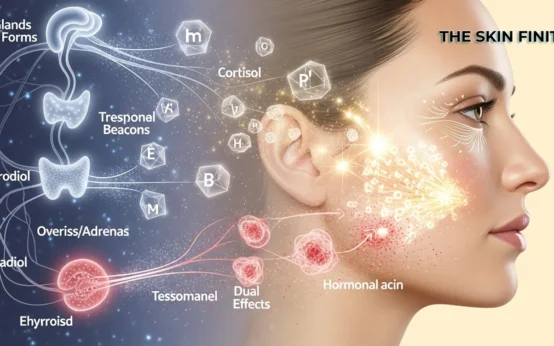 The Invisible Architects: How Your Hormones Dictate Your Skin’s Health, Glow, and Age
  The Ultimate Skincare Routine for Night Shift Workers: Adapting Your Regimen to Irregular Sleep
  Fading Sun Damage: Your Expert Guide to Reversing Spots and Uneven Tone
 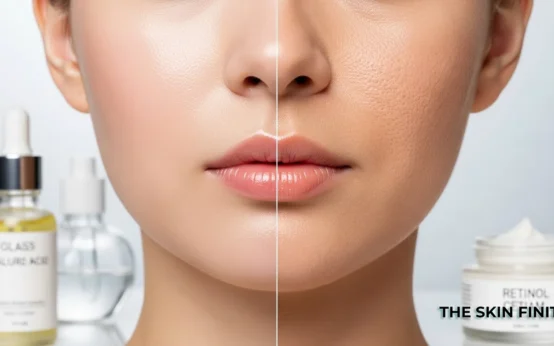 Understanding Skin Texture: Smooth vs. Rough and How to Improve It
  Niacinamide Benefits: The Science of Calming Inflammation and Evening Skin Tone
 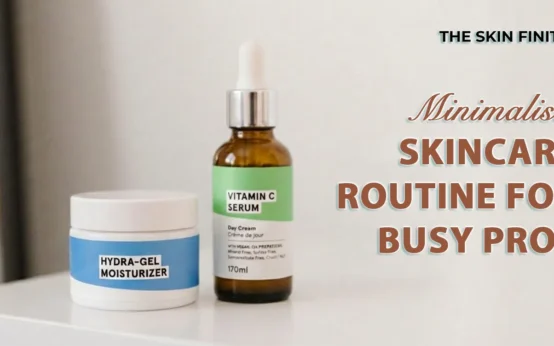 Building a Minimalist Skincare Routine for Busy Professionals