 The Skin Finity
 Have you ever stood in the skincare aisle, utterly overwhelmed by the rows of serums, moisturizers, and cleansers, each promising miraculous results? You pick up a bottle meant for “oily skin,” but hesitate—what if you’re actually combination? Using products formulated for the wrong skin type is more than a waste of money; it can lead to breakouts, dryness, irritation, and a frustrating cycle of trial and error. The truth is, an effective skincare routine isn’t built on trendy ingredients alone—it’s built on a foundation of truly knowing your skin.
The good news? You don’t need a dermatologist appointment to get started. In just five minutes, with zero fancy equipment, you can get a crystal-clear answer to the question, “What is my skin type?” This definitive guide will walk you through two simple, at-home tests—the Bare-Face Method and the Blotting Paper Test—and explain exactly what your results mean. By the end, you’ll not only know how to determine your skin type at home, but also how to care for it properly, turning confusion into confidence.
Why Bother? The Critical Importance of Knowing Your Skin Type
Think of your skin type as its inherent, genetic blueprint—it dictates how much oil (sebum) your pores produce. Your skin condition (like acne, dehydration, or sensitivity) can fluctuate, but your core type is your skin’s baseline. Knowing this blueprint is the first rule of skincare for a reason.
Using a heavy, oil-rich cream on oily skin can clog pores and cause blackheads. Conversely, using harsh, astringent products on dry skin can strip its fragile moisture barrier, leading to redness and flakiness. When you identify your skin type quickly, you can:
- Save Money: Stop buying products that work against your skin’s nature.
- Target Concerns Effectively: Choose active ingredients (like salicylic acid for oily or hyaluronic acid for dry) that align with your needs.
- Build a Balanced Routine: Layer products in a way that supports, rather than disrupts, your skin’s equilibrium.
- Achieve Your Skin Goals: Whether it’s reducing shine, alleviating tightness, or calming redness, it all starts with the right foundation.
The 5 Main Skin Types Explained: Characteristics & Key Signs
Before you perform any quick skin type test at home, it’s helpful to understand the contenders. Here’s a detailed breakdown of the five primary skin types explained, so you know what to look for during your self-assessment.
Normal Skin: The “Goldilocks” Skin
This is the balanced ideal, but it’s less common than you might think.
- Characteristics: Equally balanced sebum and moisture. Not too oily, not too dry.
- Key Signs: Few to no imperfections, no severe sensitivity, barely visible pores, a radiant and healthy complexion. The skin feels comfortable, not tight or slick, throughout the day.
Oily Skin: The Shiny T-Zone
This skin type is characterized by overactive sebaceous glands.
- Characteristics: Excess sebum production leading to a persistent shine or greasy feel.
- Key Signs: Enlarged, visible pores, especially on the nose, chin, and forehead (the T-zone). Prone to blackheads, whiteheads, and various forms of acne due to pores clogging easily. Makeup may “slide off” or break down quickly.
Dry Skin: The Tight Canvas
Dry skin lacks the lipids it needs to retain moisture and build a protective shield.
- Characteristics: Insufficient oil production, leading to a lack of natural moisturizing factors.
- Key Signs: Almost invisible pores. A rough, flaky, or ashy texture. Feelings of tightness, especially after cleansing. Redness and irritation are common. Fine lines may be more apparent. It can feel itchy or rough to the touch.
- Crucial Distinction: Dry vs. Dehydrated Skin: This is a key point of confusion. Dry skin is a type (lacking oil). Dehydrated skin is a temporary condition (lacking water) that any skin type—even oily!—can experience. Dehydrated skin may feel tight and show fine lines but can still produce oil, leading to the confusing “shiny but tight” sensation.
Combination Skin: The Split Personality
This is arguably the most common skin type, featuring a mix of two different zones.
- Characteristics: An oily T-zone (forehead, nose, and chin) coupled with normal to dry cheeks.
- Key Signs: You may have enlarged pores and shine in the T-zone, with occasional breakouts there, while the cheek and eye area feels normal, tight, or even flaky. It requires a “zone defense” approach to skincare.
Sensitive Skin: The Reactive Type
Sensitive skin is less about oil production and more about a weakened skin barrier and heightened reactivity.
- Characteristics: Prone to redness, itching, burning, and stinging in response to products, weather, or environmental factors.
- Key Signs: Reactions to many skincare products, easy flushing, visible redness (rosacea can be a factor), and a feeling of discomfort. It’s important to note: sensitive skin can be a separate concern that overlaps with other types (e.g., you can have oily and sensitive skin).
Your 5-Minute At-Home Skin Type Tests: Step-by-Step
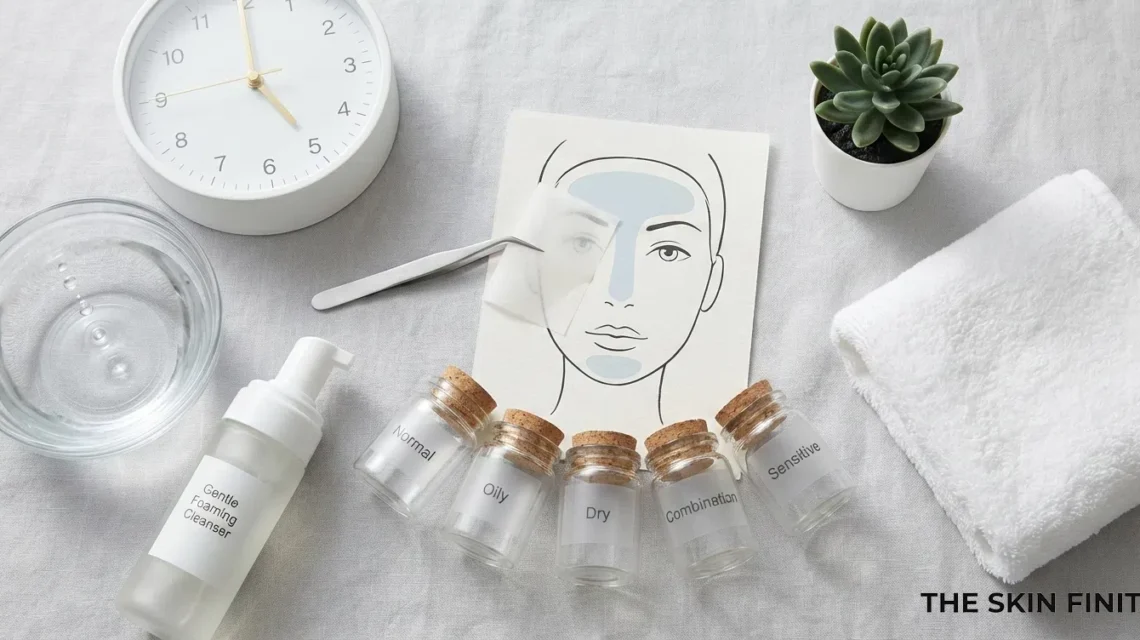
Now for the practical part—the easy at-home skin type quiz that delivers answers. These two methods are dermatologist-recommended and complement each other perfectly. You only need your eyes, your sense of touch, and possibly a single blotting paper.
Method 1: The Bare-Face “Watch and Wait” Test
This is the gold standard simple way to determine skin type. It observes your skin’s natural sebum production in its pure state.
Why it works: By cleansing and then doing nothing, you allow your skin to revert to its baseline. How it behaves tells you everything.
Step-by-Step Instructions:
- Cleanse: In the morning, wash your face with a gentle, pH-balanced cleanser. Avoid any exfoliants or harsh scrubs.
- Pat Dry: Gently pat your skin dry with a clean towel. Do not rub.
- Wait: Set a timer for 30-60 minutes. Do not apply any products—no toner, no serum, no moisturizer. This is the “bare faced skin type test” in its truest form.
- Observe: After the time is up, go to a well-lit mirror. Look closely and gently feel your skin, particularly the forehead, nose, cheeks, and chin.
- Diagnose Your Type:
- If your skin feels tight, itchy, or shows flaky patches, you have DRY skin.
- If your face looks shiny all over, you have OILY skin.
- If there’s noticeable shine only on your forehead, nose, and/or chin (T-zone), but your cheeks feel normal or dry, you have COMBINATION skin.
- If your skin feels comfortable, hydrated, and has no extreme shine or tightness, you have NORMAL skin.
- If you notice redness, stinging, or burning during this period, you have a SENSITIVE component (alongside one of the above types).
Method 2: The Blotting Paper Test
This is a fantastic physical test that visually reveals your oil distribution. It’s especially useful if you find the “feel” test subjective.
Why it works: Blotting papers are designed to absorb oil. The pattern and amount of oil absorbed provide a clear map of your sebum production.
Step-by-Step Instructions:
- Prepare: Later in the day (early afternoon is ideal), ensure your face is free of heavy moisturizers or makeup. Or, use your skin 60 minutes after the “bare face” cleanse.
- Blot: Gently press a clean, dry blotting paper on different areas of your face: forehead, nose, chin, and each cheek. Press firmly but don’t rub.
- Inspect: Hold each sheet up to the light to see the oil transparency.
- Diagnose Your Type:
- If the papers from all areas show heavy, clear oil marks, you have OILY skin.
- If papers show little to no oil from any zone, you have DRY skin.
- If papers from the T-zone (forehead, nose, chin) show oil, but the cheek papers are relatively clean, you have COMBINATION skin.
- If all papers show minimal, even traces of oil, you have NORMAL skin.
Pro Tips for Accurate Testing & Common Mistakes to Avoid
- Test in Normal Conditions: Don’t test right after a workout, a steamy shower, or in extreme humidity/cold, as these can temporarily alter your skin’s state.
- Use a Gentle Cleanser: A harsh, stripping soap can leave any skin feeling tight, skewing your results toward “dry.”
- Be Honest: Assess your skin as it is today, not as you wish it were. Hormonal fluctuations can cause minor shifts, but your core type will remain consistent.
- Address the “Shiny but Tight” Paradox: If your skin looks oily but feels tight and parched, you likely have dehydrated skin (lacking water) on top of an oily skin type. The solution is oil-free, hydrating ingredients like hyaluronic acid and glycerin.
Your Skin Type Decoder: Actionable Skincare Routines & Tips
Now that you’ve completed the skin type test at home, it’s time to translate that knowledge into a personalized routine. Here’s how to care for your unique skin blueprint.
Normal Skin Care: Maintain the Balance
- Core Principle: Gentle maintenance. Don’t overcomplicate it.
- Cleanse: A mild, hydrating cream or gel cleanser.
- Treat: Antioxidants like Vitamin C for protection, and occasional exfoliation (1-2x/week) to maintain radiance.
- Moisturize: A lightweight lotion or cream that supports the skin’s natural hydration.
- Sun Protection: Non-negotiable daily SPF 30+.
Oily Skin Care: Control Shine, Don’t Strip
- Core Principle: Regulate oil production, keep pores clear, and hydrate with oil-free formulas.
- Cleanse: A foaming or gel cleanser with salicylic acid or niacinamide to cut through oil.
- Treat: Niacinamide is your best friend (regulates oil, minimizes pores). Use salicylic acid (BHA) to exfoliate inside pores and prevent clogs.
- Moisturize: An oil-free, non-comedogenic gel or gel-cream moisturizer. Never skip moisturizer—dehydrated skin can overproduce oil.
- Sun Protection: Opt for matte-finish, oil-free mineral or chemical sunscreens.
Dry Skin Care: Nourish and Lock In Moisture
- Core Principle: Replenish lipids, repair the moisture barrier, and prevent water loss.
- Cleanse: A creamy, non-foaming, hydrating cleanser. Avoid hot water.
- Treat: Hydrating serums with hyaluronic acid on damp skin. Gentle lactic acid (AHA) can help with flakiness.
- Moisturize: A rich cream containing ceramides, fatty acids, and cholesterol. Seal it in with a few drops of facial oil (like squalane or jojoba) if needed.
- Sun Protection: A moisturizing sunscreen with added hydrating ingredients.
Combination Skin Care: The Zone Defense Strategy
- Core Principle: Balance. Use products that normalize the entire face, and occasionally treat different zones.
- Cleanse: A gentle, balancing gel or milky cleanser that won’t over-dry cheeks or under-clean the T-zone.
- Treat: Apply salicylic acid or niacinamide primarily to the oily T-zone. Use hydrating serums all over.
- Moisturize: A lightweight, balancing moisturizer all over. You can use a slightly richer cream on dry cheek areas if needed.
- Sun Protection: A broad-spectrum sunscreen suitable for all face zones.
Sensitive Skin Care: Soothe and Simplify
- Core Principle: Minimize ingredients, avoid common irritants, and strengthen the skin barrier.
- Cleanse: A supremely gentle, fragrance-free, soap-free cleanser.
- Treat: Soothing ingredients like centella asiatica, oat extract, aloe, and panthenol. Always patch test new products.
- Moisturize: A basic, reparative moisturizer with ceramides and occlusives.
- Sun Protection: A 100% mineral (zinc oxide/titanium dioxide) sunscreen is often best tolerated. Avoid chemical filters and fragrance.
Frequently Asked Questions (FAQs) About Finding Your Skin Type
1. How do I know my skin type at home?
You can perform a simple self-assessment using the Bare-Face Method (cleansing and observing your skin after 30-60 minutes) or the Blotting Paper Test (pressing papers on different face zones to see oil absorption). Both are reliable ways to determine your skin type at home.
2. What are the 5 main skin types?
The five primary skin types are Normal, Oily, Dry, Combination, and Sensitive. Understanding these categories is the first step to identifying your skin type quickly.
3. Is the blotting paper test accurate for skin type?
Yes, the blotting paper skin type test is a highly accurate physical method for assessing oil production, which is a key determinant of skin type. For the most complete picture, use it in conjunction with the observational Bare-Face Method.
4. Can my skin type change over time?
Absolutely. Your skin type can change due to factors like age (oil production decreases), hormonal shifts (pregnancy, menopause), significant climate changes, medications, and overall health. It’s a good idea to reassess your skin every few years.
5. How to tell if you have oily or dry skin?
Oily skin will feel slick and look shiny, especially in the T-zone, shortly after cleansing. Dry skin will feel tight, rough, or look flaky, and will not produce noticeable shine. The bare face method makes this distinction very clear.
6. What is the bare face method for skin type?
The bare face method is a simple at-home skin type test where you wash your face with a gentle cleanser, pat it dry, apply no products, and observe how your skin looks and feels after 30-60 minutes. The results directly indicate your skin type.
7. How long should I wait after washing to check skin type?
Dermatologists typically recommend waiting between 30 to 60 minutes after cleansing. This gives your skin enough time to return to its natural state and for sebum production to become visible.
8. What’s the difference between dry and dehydrated skin?
Dry skin is a skin type characterized by a lack of oil (sebum). Dehydrated skin is a temporary condition where the skin lacks water. Any skin type—oily, combination, or dry—can become dehydrated. Dehydrated skin often feels tight but may still appear oily.
9. How to determine combination skin?
You determine combination skin if you observe oiliness and enlarged pores specifically in the T-zone (forehead, nose, chin), while your cheeks remain normal to dry. This “split” behavior is the hallmark of combination skin.
10. Do I need different products for different skin types?
Yes, using products formulated for your specific skin type is crucial. Ingredients and formulations are designed to address the unique needs and challenges of each type, making your skincare routine much more effective.
11. Is sensitive skin a separate skin type?
While often listed as a fifth type, sensitive skin is best understood as a skin condition or tendency that can overlap with any of the other four types (oily, dry, etc.). It refers to skin that is easily irritated and reactive.
12. Why is my skin shiny but feels tight?
This classic sign points to dehydrated skin. Your skin may be producing excess oil (indicating an oily or combination type) but is severely lacking in water content, causing the uncomfortable tight feeling. Focus on hydrating, water-based products and humectants.
Your Personalized Skincare Journey Starts Now
Finding your skin type isn’t a complex science reserved for experts; it’s a simple, empowering first step that anyone can take in just five minutes. By performing the quick skin type test at home outlined in this guide, you’ve moved from guessing to knowing—and that knowledge is the most powerful tool in your skincare arsenal.
Remember, your skin type is your roadmap. It guides every product choice you make, from cleanser to sunscreen. With this foundation, you can now navigate the world of skincare with confidence, selecting ingredients and formulas designed to work with your skin, not against it. Ditch the one-size-fits-all approach and start building the personalized, effective routine your unique skin deserves.
Ready to take the next step? Share your skin type and your biggest “aha!” moment from this guide in the comments below! Looking for product recommendations? Explore our curated guides on [The Best Moisturizers for Oily Skin] or [Gentle Routines for Sensitive Skin] to put your new knowledge into action.

 Skincare Myths Debunked: Evidence-Based Facts & Future Trends for 2026
  The Invisible Architects: How Your Hormones Dictate Your Skin’s Health, Glow, and Age
  The Ultimate Skincare Routine for Night Shift Workers: Adapting Your Regimen to Irregular Sleep
  Herbal Extracts in Skincare: Aloe Vera, Green Tea, and Chamomile
  Fading Sun Damage: Your Expert Guide to Reversing Spots and Uneven Tone
  Understanding Skin Texture: Smooth vs. Rough and How to Improve It